
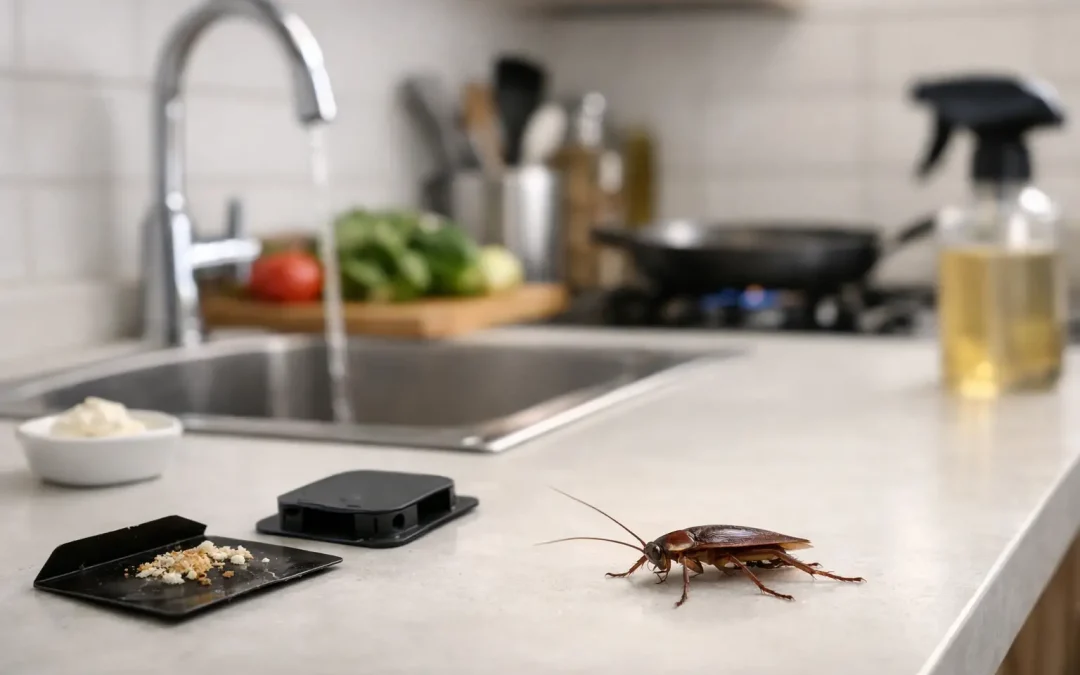
A cockroach sighting in a kitchen rarely means you have seen the whole problem. Roaches are nocturnal, fast-moving and highly effective at staying hidden near warmth, food and moisture. That is why cockroach prevention for kitchens needs to focus on the conditions that allow them to settle, breed and spread, not just on the insects you happen to notice.
For homeowners, that usually means protecting food preparation areas and avoiding a larger infestation. For commercial kitchens, cafes, care settings and catering environments, the stakes are higher. A cockroach issue can quickly become a hygiene failure, a staff concern and a reputational risk. In regulated settings, it can also raise serious compliance questions.
Why kitchens attract cockroaches
Kitchens give cockroaches almost everything they need in a small area. They are drawn to food residue, grease build-up, standing water, warmth from appliances and dark harbourage points behind units or under sinks. Even well-kept kitchens can develop risk points if there are small plumbing leaks, gaps around pipework or inaccessible voids that are rarely cleaned.
The difficult part is that cockroaches do not need obvious mess to survive. A few crumbs under a fridge, a thin film of grease behind a cooker or moisture around a waste pipe may be enough to support activity. In commercial premises, long operating hours, stock movement, deliveries and drainage systems create even more opportunities.
This is why prevention is rarely about one big fix. It is usually about removing several small risk factors before they combine into a persistent problem.
Cockroach prevention for kitchens starts with food and moisture control
The first priority is to reduce access to food and water. In domestic kitchens, dry goods should be kept in sealed containers where possible, especially flour, cereals, pet food and baking ingredients. Worktops need to be wiped properly at the end of the day, not just visibly cleared. Grease around hobs, splashbacks and extractor areas should be removed before it builds up.
Water matters just as much. Cockroaches can survive longer without food than without moisture, so dripping taps, damp under-sink cupboards and condensation around appliances all need attention. If a kitchen sink unit smells musty or stays damp, that area deserves a closer look.
In commercial kitchens, this standard needs to be tighter and more structured. Closing checks should include floor-edge cleaning, waste removal, cleaning beneath movable equipment and a routine inspection of wash areas and drains. If waste sacks are left indoors overnight or food debris accumulates under preparation benches, prevention measures are already under strain.
Proofing matters more than many people realise
A clean kitchen is important, but cleanliness alone does not stop cockroaches if they can still enter and hide. They exploit surprisingly narrow gaps around pipes, conduits, wall junctions, service penetrations and damaged seals. In older buildings, worn skirting lines, cracked tiles and gaps behind fitted units often create ideal harbourage.
Proofing should focus on entry points and hiding places. Gaps around plumbing should be sealed properly. Broken seals around sinks, splashbacks or worktops should be repaired. Damaged kickboards and voids behind integrated appliances should not be ignored simply because they are out of sight.
For food businesses, proofing also needs to account for the reality of deliveries and operational traffic. Rear access doors, waste areas and storerooms can undermine an otherwise tidy kitchen if they are not managed carefully. A pest issue often starts just outside the main preparation space and moves inwards over time.
High-risk areas that are often missed
When people think about kitchen hygiene, they usually focus on visible surfaces. Cockroaches are more interested in the areas that get overlooked. Behind fridges and freezers, under dishwashers, inside motor compartments, around hot water pipes and within electrical trunking are all classic harbourage zones.
Another common issue is clutter. Stacks of cardboard, unused equipment, overloaded under-sink cupboards and rarely moved stock create shelter and make inspection harder. Cardboard is especially problematic in commercial environments because it provides warmth, cover and a route of transfer from incoming deliveries.
Bins also deserve more attention than they often receive. A bin with a liner but residue around the rim or underneath the base can still attract pests. External bin areas matter too, because if waste storage is poorly managed outside, kitchen infestations are more likely to follow.
What effective monitoring looks like
One of the biggest mistakes in cockroach control is waiting until activity becomes obvious. By that stage, the infestation is rarely new. Good prevention includes routine monitoring, especially in kitchens with high footfall, high food throughput or a history of pest pressure.
For homeowners, monitoring can be as simple as paying attention to signs that do not look dramatic at first. Unusual specks in cupboards, a stale oily odour in enclosed areas, shed skin fragments or repeated activity near the same appliance should not be dismissed.
In commercial settings, monitoring needs to be more systematic. Inspections should cover warm equipment, drainage points, storage zones and structural gaps. Staff should know what to report and who to report it to. If a site relies on memory instead of records, early warning signs are easier to miss.
This is where professional support becomes valuable. A prevention plan backed by regular inspections, documented findings and practical site recommendations is far more reliable than reacting to one sighting at a time.
Cockroach prevention for kitchens in commercial settings
Commercial kitchens face a different level of risk because the consequences are broader. One incident can affect hygiene audits, customer confidence, staff morale and operating continuity. In sectors such as catering, care homes, logistics and pharmaceutical support environments, pest prevention is not just a housekeeping matter. It is part of site control.
That means prevention should be built into routine operations. Cleaning schedules need to match actual risk points, not just general areas. Maintenance teams should treat leaks, gaps and damaged finishes as pest issues as well as repair issues. Stock rotation and delivery checks should also be part of the process, because cockroaches are often introduced through packaging, equipment or poorly managed incoming goods.
For multi-site operators or regulated premises, documentation is equally important. If there is a trend developing in one area of the building, you need evidence early enough to act. A professional pest management partner can support that with inspection reports, treatment records and practical advice aligned with hygiene and compliance standards.
When prevention is no longer enough
There is a point where cleaning and proofing alone will not resolve the issue. If you are seeing live cockroaches in daylight, repeated activity around the same areas or signs spreading beyond one cupboard or appliance, the problem may already be established. Daytime sightings often indicate heavier pressure, because harbourage areas are becoming overcrowded.
This is especially true in commercial kitchens, where pests can move through service voids, neighbouring units, drains or shared building infrastructure. Treating one visible area without understanding the source often leads to short-term improvement followed by renewed activity.
Professional treatment is then the sensible next step. The right approach depends on the species, the level of infestation, the layout of the kitchen and the sensitivity of the site. In homes, discretion and safety around children and pets are usually key concerns. In commercial premises, treatment has to work around operations, hygiene controls and audit expectations.
Pest Pure Solutions supports both domestic and commercial clients with professional pest control, prevention advice and ongoing programmes where risk management needs to be continuous rather than reactive.
Practical habits that reduce long-term risk
The most effective kitchens are not necessarily the ones that are cleaned hardest once a week. They are the ones run with steady discipline every day. Food debris is removed before close, leaks are reported early, stock is stored properly and hidden areas are inspected often enough to catch changes.
For households, that may mean moving appliances occasionally, checking under the sink more often and avoiding the habit of leaving pet food down overnight. For businesses, it means joining up cleaning, maintenance and pest control rather than treating them as separate tasks.
There is also a trade-off to recognise. Deep cleaning can reduce risk significantly, but if proofing defects remain or staff routines slip during busy periods, the gains may not last. Equally, sealing gaps helps, but it will not compensate for unmanaged food waste or standing water. Good prevention works best when hygiene, maintenance and monitoring are all dealt with together.
If there is one useful rule to keep in mind, it is this: cockroaches settle where conditions stay favourable. Change those conditions early, and you are far less likely to face a larger, more disruptive problem later.
Recent Comments