
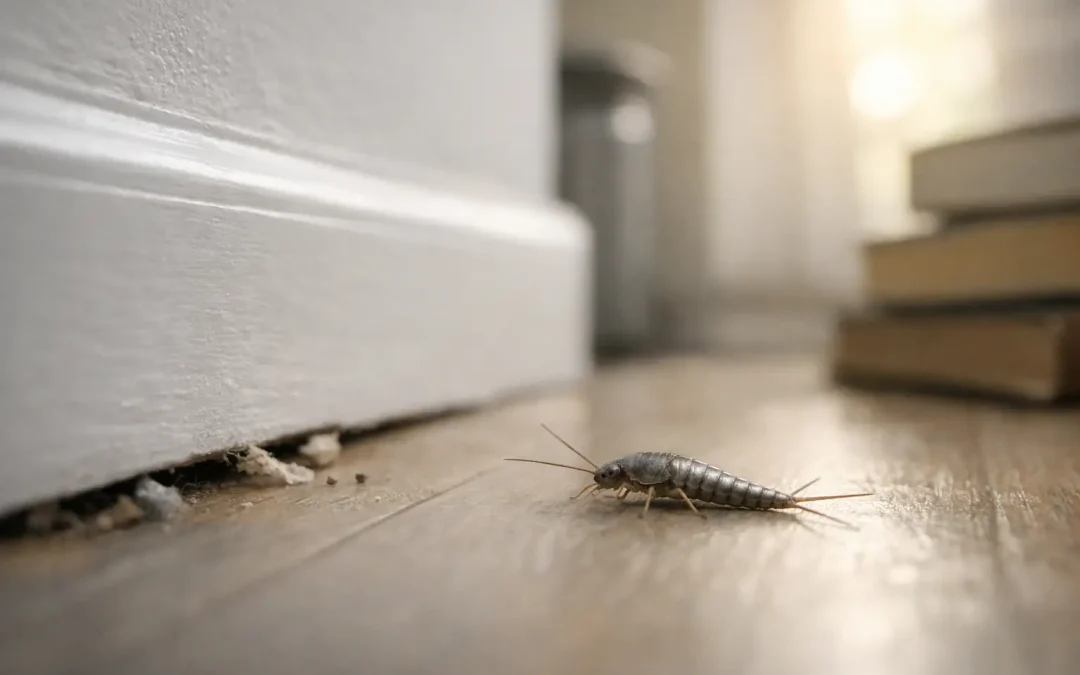
A silverfish sighting is usually not random. If you are asking, “why are there silverfish in my house?”, the answer is normally a combination of shelter, accessible food and the right indoor conditions. These insects prefer quiet, undisturbed places, so seeing one in a bathroom, kitchen cupboard or bedroom may indicate that more are active out of sight.
Silverfish are not known to spread disease in the way that rodents or cockroaches can, but they can damage books, wallpaper, stored clothing, paperwork and food packaging. More importantly, repeated activity can point to excess moisture, gaps in the building fabric or a cluttered storage area that needs attention.
Why are there silverfish in my house?
Silverfish enter or establish themselves where a property provides protection and a reliable source of starch-based materials. They are nocturnal and avoid light, which is why many homeowners only spot them when switching on a bathroom or kitchen light late at night.
Traditional silverfish favour humid areas. Leaking pipework, condensation, poorly ventilated bathrooms, damp utility rooms and moisture beneath kitchen units can all create suitable conditions. They can also live behind skirting boards, under flooring, inside wall voids and around pipe penetrations, where moisture is less obvious.
However, not every silverfish problem is solely about damp. Long-tailed silverfish, which are increasingly encountered in homes and commercial premises, can tolerate drier conditions and spread widely through a building. They may be found in bedrooms, hallways, offices, loft spaces and cupboards, particularly where there is paper, cardboard, dust or stored belongings.
In practical terms, silverfish are often attracted by a property that offers three things: dark harbourage, limited disturbance and materials they can feed on. They do not need an untidy home to survive, but accumulated cardboard, old magazines, unsealed dry foods and stored textiles make it easier for a population to develop unnoticed.
What attracts silverfish indoors?
Silverfish feed on carbohydrates and protein-containing debris. Their diet can include glue in books and wallpaper, paper, photographs, cereals, flour, pet food, textiles, dead insects, shed skin and household dust. They are resourceful pests, so a clean worktop alone will not remove every food source.
Bathrooms and kitchens remain common starting points because of humidity. A slow leak beneath a sink, failed sealant around a bath, an extractor fan that is not used regularly or condensation on cold surfaces can create a favourable environment. In older properties, silverfish may also move through gaps around service pipes or beneath floors from one room to another.
Bedrooms and living areas can be affected when the issue involves long-tailed silverfish. Piles of paperwork, books stored close to walls, cardboard delivery boxes and infrequently moved furniture offer ideal harbourage. Central heating does not necessarily prevent them, especially if they can access humid voids elsewhere in the property.
For landlords and facilities managers, silverfish can be particularly frustrating in vacant rooms, storage areas and archive spaces. Low footfall gives them time to feed and breed without interruption. In commercial premises, this can become a hygiene and asset-protection issue where records, packaging or stock are at risk.
They may have arrived with stored items
Silverfish can be brought into a building in cardboard boxes, used books, paperwork, furniture or items moved from another property. This does not mean a home is unclean or poorly managed. It simply means the insects have found conditions that allow them to remain.
Cardboard is a common concern because it provides both a food source and a sheltered place to hide. Once boxes are stored in a warm cupboard, garage or attic for months, activity can build before it is noticed. Removing unnecessary packaging promptly reduces this opportunity.
Small gaps give them a route around the property
Silverfish are flat-bodied and can move through very small openings around pipes, skirting, cracked plaster, floor edges and service ducts. In flats and multi-occupancy buildings, they may travel between units through shared voids. Treating only the room where one insect was seen may therefore be insufficient.
A proper inspection considers the likely routes, not just the visible pest. This is especially relevant where activity continues after household cleaning or where silverfish are appearing in several rooms.
Are silverfish a sign of damp or mould?
They can be, but not always. Common silverfish are strongly associated with humidity, so their presence in a bathroom, utility room or basement should prompt a check for leaks, poor ventilation and persistent condensation. Damp conditions may also support mould growth, which deserves separate attention for the health of occupants and the condition of the property.
That said, silverfish are not a reliable diagnostic tool for mould. A dry-looking room can still have moisture inside a wall void, beneath flooring or behind fitted units. Equally, long-tailed silverfish may persist in relatively dry areas if food and harbourage are available.
Look for practical signs: peeling wallpaper, musty odours, swollen timber, recurring condensation, staining around pipework or loose bathroom sealant. If these are present, resolving the moisture source is as important as controlling the insects. Pest treatment will be less effective in the long term if the underlying conditions remain unchanged.
How to reduce silverfish activity at home
The most effective approach combines housekeeping, moisture control, proofing and, where needed, professional treatment. One-off sightings may be managed by improving conditions, but regular sightings or insects in multiple rooms suggest a more established issue.
Start by reducing humidity. Use extractor fans during and after showering or cooking, repair plumbing leaks, dry wet areas quickly and avoid drying large amounts of laundry indoors without adequate ventilation. A dehumidifier can help in persistently damp spaces, although it will not solve a leak or structural moisture problem.
Next, remove the places silverfish use to hide. Keep stored paper and textiles off the floor where possible, reduce unused cardboard, vacuum along skirting boards and behind furniture, and clean crumbs or spills from cupboards. Transfer flour, cereal, pet food and other dry goods into well-sealed containers. These steps limit food and harbourage, but they may not reach insects living in voids.
Proofing also matters. Seal obvious cracks around skirting boards and pipe entries once you are confident the area is dry and accessible. Pay attention to gaps below kitchen units, around utility services and where floor finishes meet walls. In larger buildings, proofing should be planned carefully so that pest routes are addressed without interfering with essential services or ventilation.
Avoid relying on random aerosol sprays. They may kill insects that are directly hit, but silverfish spend most of their time concealed. Misapplied products can also push activity deeper into cracks without dealing with the harbourage or the main population.
When professional silverfish control is the sensible option
Professional help is advisable if you see silverfish repeatedly, find them in several rooms, notice damage to books or wallpaper, or have tried moisture control and cleaning without improvement. It is also the appropriate route for occupied rental properties, care settings, food-related businesses and sites where hygiene records or client confidence matter.
A professional survey identifies the species where possible, maps likely harbourage and considers moisture, access routes and the building layout. Treatment can then be targeted to cracks, voids and affected areas rather than applied indiscriminately. Depending on the level of activity, follow-up visits and monitoring may be needed because eggs and hidden insects can survive an incomplete first attempt.
For commercial clients, documented inspections, trend reporting and planned preventative measures provide a clearer audit trail than reactive spraying. Pest Pure Solutions applies this practical, hygiene-led approach across Dublin and surrounding counties, with treatment plans tailored to the property and the level of risk.
Silverfish are persistent because they are good at staying unseen, not because a property is beyond repair. Address moisture and storage conditions early, and seek a professional inspection if sightings continue. Acting before activity spreads through cupboards, voids and adjoining rooms is usually the quickest route back to a protected, comfortable property.
Recent Comments