
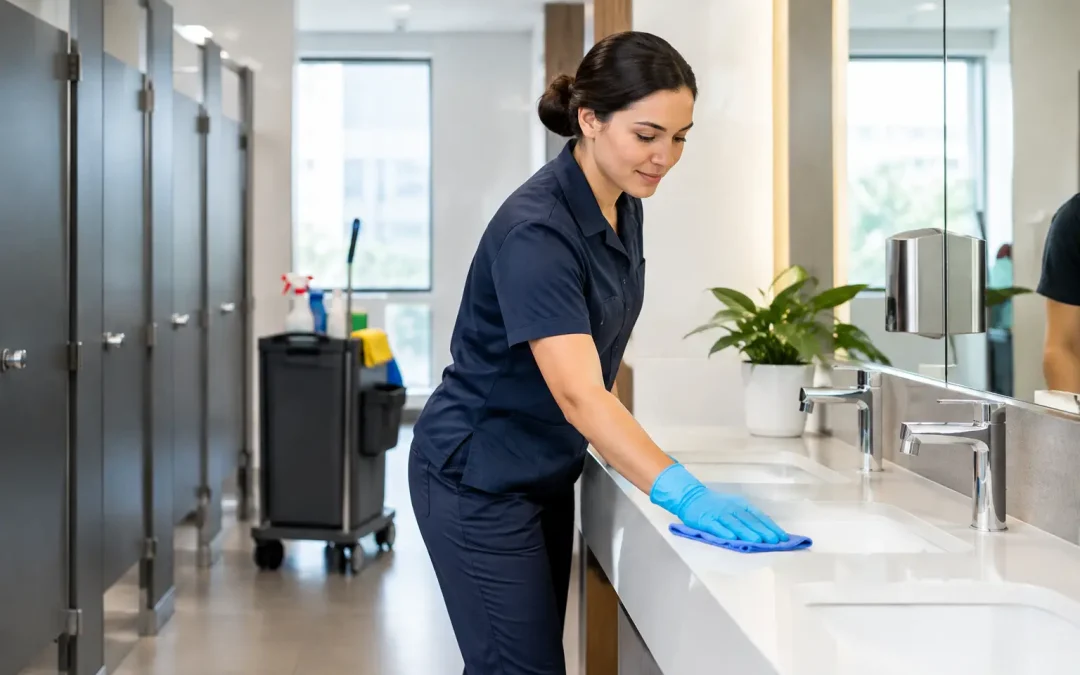
A washroom is one of the few places every employee and visitor will judge without being asked. An overflowing sanitary bin, stale odour or wet entrance floor can quickly undermine confidence in an otherwise well-run premises. Professional washroom services for office buildings give facilities teams a practical way to protect hygiene, staff comfort and the standard expected across the workplace.
For office managers, the goal is not simply to keep supplies topped up. A reliable service should make washrooms feel clean, discreet and consistently maintained, while reducing avoidable complaints and the burden on internal teams. The right plan depends on the building, its occupancy and how the facilities are used.
What office washroom services should cover
A well-managed washroom service is built around the items that have the greatest impact on hygiene and user experience. Sanitary disposal is central. Units must be suitable for the setting, positioned discreetly and exchanged on a regular schedule so that washrooms remain pleasant and hygienic throughout the working week.
Air scenting can also make a meaningful difference when it is selected carefully. The aim is a clean, neutral impression, not an overpowering fragrance that simply masks poor conditions. In smaller washrooms, poorly ventilated areas or high-traffic buildings, scenting may need to be adjusted to suit the space and usage level.
Entrance mat services are often included within a wider hygiene plan because the condition of the entrance affects the whole office. Quality mats help retain moisture and dirt before it is walked through reception, corridors and washroom areas. In wet weather, this supports cleanliness and can help reduce slip risks around busy entrances.
Depending on the site, a service arrangement may also involve managing consumables and advising on the best placement or frequency for hygiene units. The important point is that the programme is based on the actual premises rather than a one-size-fits-all schedule.
Why washroom standards affect the whole office
Office washrooms are high-contact spaces. Their condition influences how staff feel about their employer and how visitors assess the organisation. This matters particularly for client-facing businesses, shared office buildings and workplaces with regular contractors, candidates or customers on site.
Poor washroom presentation can create practical problems as well as reputational ones. When disposal units are not changed frequently enough, or odour control is unsuitable, staff may raise repeated concerns with reception, HR or facilities. These issues take time to manage and can become more noticeable when an office is busy or hosting visitors.
A consistent programme allows the facilities team to set a clear standard. Scheduled servicing means fewer last-minute requests, while appropriate products make it easier to maintain a professional environment between visits. It also gives building managers one accountable provider for essential washroom hygiene elements rather than relying on ad hoc replacements.
There is a wider hygiene benefit too. Damp floors, neglected bins and poor housekeeping can create conditions that are less pleasant for people and more attractive to nuisance pests. During the winter months, rodents such as rats and mice may seek warmth and shelter in commercial properties, particularly where there are gaps around service entries, storage areas or waste points. Good washroom servicing supports a clean environment, but it should sit alongside proper cleaning, waste management and professional pest prevention where required.
Choosing the right service frequency
The best frequency is based on footfall, not just the number of washrooms. A small office with a stable team may need a different schedule from a multi-storey building with visiting clients, flexible workspaces and busy shared facilities.
Consider how many people use each washroom, whether the building opens late or at weekends, and whether there are periods of unusually high attendance. A unit that is adequate during a quiet month can become insufficient after a return-to-office policy, a growth in headcount or a change in tenant mix.
Facilities managers should also look at the layout. A washroom near reception often needs a higher presentation standard because it is more likely to be used by visitors. Accessible toilets, staff changing areas and washrooms serving canteens may also require particular attention based on their use.
A professional provider should review these factors before recommending a service cycle. More frequent visits improve capacity and presentation, but they are not automatically necessary for every site. The right approach balances cost control with reliable hygiene, avoiding both under-servicing and unnecessary spend.
Signs that the current arrangement needs attention
Repeated odour complaints, full sanitary units before the scheduled exchange and regular requests for emergency supplies are clear signs that a review is needed. So are visible marks around entrance areas during wet periods, or a noticeable difference between the standard of office areas and washrooms.
It is also worth reviewing the service after office refurbishments, changes to cleaning contractors or a rise in occupancy. These changes often affect how facilities are used, even when the number of washrooms remains the same.
Washroom services for office buildings and compliance
For many offices, washroom hygiene is primarily about providing a safe, dignified and professional environment. In regulated settings, however, it can also form part of a wider site hygiene and facilities management programme. Businesses operating in sectors such as care, catering, logistics or pharmaceutical support functions may need clearer service records and dependable contractor accountability.
The level of documentation required depends on the organisation and its internal procedures. A standard office will not need the same records as a tightly controlled site. However, every business benefits from knowing what has been serviced, when it was completed and who to contact if requirements change.
This is where a specialist hygiene provider can offer more value than a basic collection service. They should understand the importance of discretion, access arrangements, staff safety and agreed service standards. Visits should cause minimal disruption, while any issue that may affect hygiene or presentation should be raised promptly.
Practical steps for facilities managers
Before appointing a provider, walk the building as a visitor would. Check the entrance on a wet day, inspect each washroom at different times and note where complaints tend to arise. This gives a more accurate picture than relying on a service specification written years ago.
Ask whether the proposed programme can be tailored to your building’s occupancy and whether it can be reviewed as needs change. Confirm the service days, access procedures, point of contact and what happens if an additional visit is required. These details prevent uncertainty when a washroom issue needs quick attention.
It is also sensible to keep responsibilities clear between the hygiene provider and cleaning team. A sanitary disposal service does not replace daily cleaning, and air scenting does not resolve an underlying drainage, ventilation or cleaning issue. Each element should support the others so that problems are identified rather than hidden.
Pest Pure Solutions provides tailored washroom hygiene services for commercial premises, including sanitary disposal, air scents and entrance mats. For office buildings in Dublin and the surrounding counties, a bespoke plan can help maintain the standard expected by staff, visitors and building managers while fitting the way the site actually operates.
A clean washroom should never be a point of discussion in a well-managed office. With sensible servicing intervals, suitable products and clear responsibility, it becomes what it should be: a dependable part of a professional workplace.
Recent Comments