
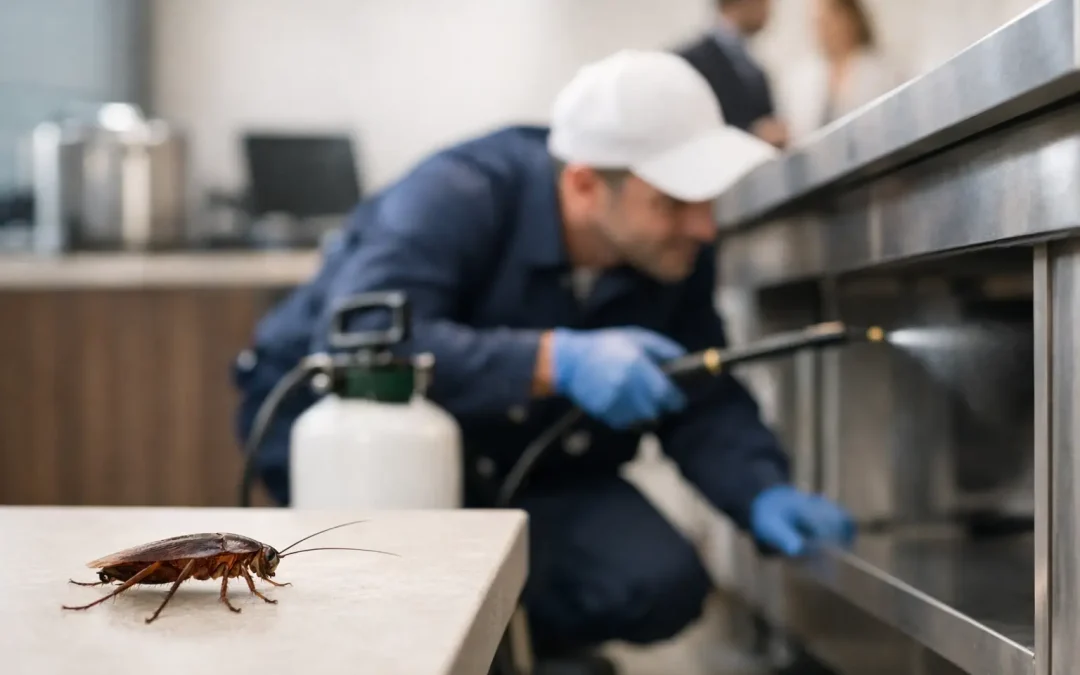
A cockroach sighting in a staff kitchen, goods-in area or care setting is rarely an isolated incident. Cockroach treatment for businesses must do more than remove the insects seen on the day. It needs to identify harbourage, interrupt breeding, protect hygiene standards and leave a clear record of the action taken.
For commercial premises, the risk is not limited to an unpleasant customer experience. Cockroaches can contaminate food, packaging, work surfaces and stored goods. In regulated environments, an unmanaged infestation can also raise serious concerns during audits, inspections and customer reviews. A fast, discreet and documented response is essential.
Why commercial cockroach activity needs prompt action
Cockroaches are nocturnal and spend much of their time hidden in warm, tight spaces close to food and moisture. By the time one is seen during business hours, there may already be activity behind kitchen units, beneath equipment, around pipework, inside electrical housings or in service voids.
The German cockroach is particularly common in commercial kitchens, food preparation areas, accommodation, care settings and staff facilities. It reproduces quickly and can move through a building in deliveries, cardboard, appliances and shared service routes. Oriental cockroaches are more often linked to damp areas, drains, basements and external access points, but they can still enter occupied areas where conditions allow.
A single treatment based only on what is visible can reduce activity temporarily without dealing with the source. This is why professional control begins with inspection rather than a blanket application of insecticide.
Effective cockroach treatment for businesses starts with inspection
A competent survey establishes where the cockroaches are active, which species is present, what is supporting the infestation and how far it may have spread. This is particularly important in multi-unit sites, warehouses, hotels, care homes and shared commercial buildings, where activity may travel through risers, drains or adjoining premises.
The inspection should examine likely harbourage areas such as voids beneath counters, motor compartments of refrigeration equipment, hot water pipes, floor drains, false ceilings, storage rooms and waste areas. Monitoring traps can help confirm the level and location of activity, especially where sightings are sporadic or staff are unsure where insects are coming from.
The findings should lead to a site-specific treatment plan. A restaurant with a busy kitchen needs a different programme from a pharmaceutical facility, logistics depot or office block. Treatment must take account of operating hours, food safety controls, vulnerable occupants, cleaning procedures and site access requirements.
Identifying the conditions that allow infestation
Cockroaches need access to food, water and shelter. Even clean premises can experience an infestation after cockroaches are introduced through stock or equipment, but poor access control and small hygiene gaps allow them to establish more easily.
Common contributing factors include food debris behind appliances, leaking pipework, overflowing bins, unsealed dry goods, cluttered storage areas and gaps around service penetrations. Cardboard can provide both hiding places and a route for introduced cockroaches, particularly in stockrooms and delivery areas.
Corrective actions are not an attempt to shift responsibility onto staff. They are a practical part of prevention. A professional provider should explain which changes are urgent, who needs to carry them out and how they will reduce the chance of further activity.
What a professional treatment programme involves
For most commercial infestations, gel baiting is a precise and highly effective method. Small placements are applied in targeted harbourage and foraging areas, allowing cockroaches to feed and return to their hiding places. The approach is discreet and avoids unnecessary treatment of wide surface areas.
Depending on the site and level of infestation, a programme may also include insect growth regulators, residual treatments in carefully selected non-food areas, monitoring devices and proofing recommendations. Treatment choices must be made with the site’s risk assessment in mind. In food handling or sensitive settings, product selection, placement and timing require particular care.
A credible programme normally involves follow-up visits. Eggs may survive an initial visit, and newly emerged cockroaches can appear afterwards. Follow-up inspections allow the technician to assess bait uptake, review monitoring results, treat newly identified harbourage and confirm that activity is declining.
It is also vital to avoid actions that compromise treatment. Staff should not spray shop-bought aerosols around bait placements, as this can repel cockroaches from the areas being monitored and reduce bait feeding. Site teams should instead follow the instructions provided by their pest control technician, including any cleaning or access requirements.
Treatment timing and business continuity
Many businesses worry that cockroach treatment will force closure. That depends on the location, severity of infestation and treatment method. Targeted gel programmes can often be carried out with minimal disruption, while larger infestations or treatments in high-risk areas may require planned access outside normal operating hours.
The right provider will be clear about any preparation, re-entry periods or restrictions. They should also work around production schedules, resident care routines, kitchen service and secure-site protocols where possible. Discretion matters, but it must never come at the expense of effective control or safe working practices.
Monitoring, reporting and compliance support
Eradication is only one part of commercial pest management. Businesses need evidence that the issue has been investigated, treated and kept under control. This is especially relevant to catering, healthcare, care homes, pharmaceutical operations, waste facilities and logistics sites where pest activity can affect supplier assurance and regulatory obligations.
A good reporting process records sightings, inspection findings, treatment points, monitoring results, recommendations and follow-up actions. Trend data is valuable because it shows whether activity is reducing, whether a problem is seasonal or whether one area of the building repeatedly needs attention.
For sites operating under GDP or other demanding quality systems, detailed bio-reports and input from a Certified Field Biologist can provide a stronger level of oversight. They help management teams understand pest risks in operational terms, demonstrate due diligence and prioritise preventative improvements before a minor issue becomes a serious non-conformance.
Pest Pure Solutions provides tailored commercial service contracts that combine treatment, monitoring, reporting and practical hygiene advice. For businesses across Dublin and the surrounding counties, this supports a controlled response to current activity as well as ongoing protection for the premises.
Prevention after treatment
Once activity is controlled, the focus should move to keeping the site unattractive to cockroaches. This does not mean creating an unrealistic cleaning regime. It means managing the pressure points that matter most: food residues, moisture, harbourage and access.
Kitchen and break areas should be cleaned behind and beneath equipment on a planned schedule, not only on visible surfaces. Food should be stored in sealed containers where practical, and waste should be removed regularly with bins kept clean and closed. Leaks, dripping taps and condensation around refrigeration should be reported promptly, as reliable water sources can sustain cockroaches even where food is limited.
Maintenance teams can also make a significant difference by sealing gaps around pipes, repairing damaged wall finishes, fitting door brushes where needed and keeping drainage systems in good condition. In warehouses and receiving areas, routine checks of incoming stock and cardboard packaging can help spot introduced activity before it reaches occupied parts of the building.
When to arrange a professional visit
Do not wait for repeated daytime sightings. Cockroaches seen in daylight may indicate competition for harbourage or a sizeable population. Other warning signs include pepper-like droppings, shed skins, egg cases, a musty odour in confined areas and unexplained activity on monitors.
An emergency call-out may be appropriate where cockroaches are found in food preparation areas, resident rooms, clinical spaces or customer-facing locations. For lower-level or recurring activity, a planned inspection can establish the source and build a proportionate treatment programme. Either way, early action is generally quicker, less disruptive and easier to document than a delayed response.
The most reliable result comes from treating cockroaches as a site-management issue, not simply an insect problem. With targeted treatment, clear responsibilities and ongoing monitoring, businesses can protect hygiene standards, maintain confidence and keep their premises operating as they should.
Recent Comments