
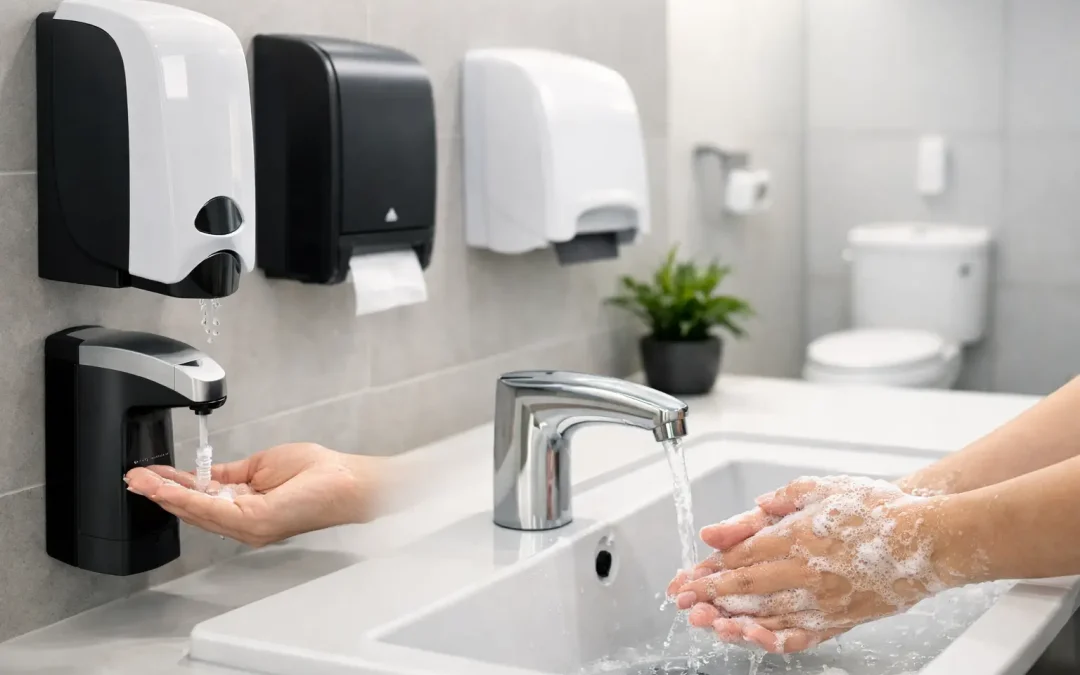
A washroom is one of the few areas every visitor, employee, resident or customer will judge without being asked. The best washroom hygiene solutions do more than make a room smell pleasant. They control waste safely, reduce touchpoints, support cleaning teams and help protect the reputation of the premises.
For a family home, the priority may be reliable sanitary waste disposal and a fresh, comfortable bathroom. For a care home, catering business, logistics site or pharmaceutical facility, washroom hygiene is also an operational and compliance concern. The right approach depends on footfall, the users of the space, cleaning routines and the level of risk associated with the site.
What Makes a Washroom Hygiene Solution Effective?
A good washroom service should solve a clear hygiene problem rather than simply add dispensers to the wall. Sanitary bins need to be discreet, hygienic and collected at a frequency that matches usage. Soap, hand-drying and surface-cleaning provisions must be dependable enough that people can use them when needed. Air care should control unpleasant odours without masking a problem caused by poor cleaning, drainage issues or overflowing waste.
Consistency matters as much as the products themselves. A well-stocked washroom on Monday that is short of soap or has a full sanitary unit by Friday is not being managed effectively. Scheduled servicing, clear responsibility and practical checks keep standards steady between visits.
The best arrangements also account for the layout of the room. High-touch points such as door handles, flush plates, taps, cubicle locks and dispensers require regular attention. In busy locations, touch-free or low-touch dispensers can reduce contact and make hand hygiene easier to maintain. They are not essential for every property, however. A smaller workplace or domestic setting may be better served by simple, durable equipment that is easy to clean and refill.
Core Washroom Hygiene Services to Consider
Sanitary Disposal That Protects Dignity and Hygiene
Sanitary waste should never be left in open bins or handled as part of general office waste. Purpose-designed sanitary disposal units provide a discreet route for the collection and removal of feminine hygiene products. They help reduce odours, prevent blockages caused by inappropriate flushing and give washroom users confidence that the facilities have been properly considered.
Service frequency should be based on actual use, not a standard schedule applied to every site. A small office with limited staff may need less frequent collection than a public-facing venue, school, care setting or busy warehouse. Where capacity is too low or servicing is too infrequent, bins can quickly become a hygiene and customer-service issue.
Hand Hygiene Supplies That Are Always Available
Handwashing is one of the most practical defences against the spread of germs in shared buildings. Soap dispensers should be positioned where they are easy to reach, maintained properly and checked often enough to avoid empty units. Hand sanitiser can be useful at entrances or in areas where immediate access to a sink is limited, but it is not a replacement for effective handwashing where hands are visibly soiled.
The choice between paper towels and hand dryers depends on the site. Paper towels offer a straightforward option where users need to dry hands quickly or where a facility prefers to minimise time spent around shared equipment. Hand dryers can reduce consumable waste, but they need appropriate cleaning and maintenance. There is no single correct choice – reliability, user needs and the cleaning plan should guide the decision.
Air Care That Addresses the Cause, Not Just the Smell
A clean, neutral-smelling washroom creates a better impression than one overwhelmed by fragrance. Air freshening systems can maintain a pleasant environment, particularly in washrooms with high footfall or limited ventilation. But fragrance should support hygiene, not conceal a persistent issue.
Repeated odours may point to inadequate cleaning, poor extraction, blocked drains, leaks, overflowing sanitary units or waste that is not being removed often enough. These causes should be investigated and corrected. In some commercial settings, persistent drain odours can also attract flies, creating a wider hygiene and pest-management concern.
Entrance Mats and Managed Floors
Washroom hygiene starts before a person reaches the sink. Dirt and moisture brought in from outside can travel through a building and make floors harder to maintain. Quality entrance matting helps capture debris and moisture, reducing slip risks and limiting the spread of dirt into washroom areas.
For commercial premises, a managed mat service can be particularly useful during wet weather and periods of high visitor traffic. It supports cleaner floors while reducing the burden on internal cleaning teams. The mat must be correctly sized and regularly replaced or cleaned, otherwise it can become saturated and less effective.
Best Washroom Hygiene Solutions for Commercial Sites
Commercial washrooms need a service plan rather than a collection of products. Facility managers should begin by assessing the number of users, opening hours, visitor patterns, cleaning coverage and whether the premises operate under sector-specific hygiene expectations.
In care homes, washroom services should support dignity, infection-control practices and the needs of residents, visitors and staff. In catering environments, hand hygiene and waste control are closely linked to food safety. Logistics facilities may require durable equipment and servicing schedules that suit shift patterns. Pharmaceutical and other regulated operations often need documented evidence that hygiene-related services are being completed as agreed.
A tailored programme may combine sanitary disposal, air care, soap and paper supply, entrance mats and scheduled hygiene checks. Documentation is valuable because it gives managers visibility over what was serviced, when it was completed and whether any issue needs follow-up. For high-governance sites, this evidence can support internal audits and wider compliance processes.
It is also sensible to align washroom hygiene with pest prevention. Full bins, standing water, poorly maintained drains and food waste left in staff facilities can create conditions that support flies and other pests. Hygiene servicing and professional pest management work best when they are treated as connected parts of site protection rather than separate tasks.
Common Gaps That Undermine Washroom Standards
Many washroom problems begin with small failures that are allowed to repeat. Empty soap dispensers discourage handwashing. Overfilled sanitary units create discomfort and odour. Damaged dispensers look neglected and are difficult to keep clean. A cleaning schedule may exist on paper but fail to account for the busiest times of day.
Another common gap is relying on staff complaints as the only monitoring method. By the time someone raises a concern, customers or employees may already have had a poor experience. Routine inspections are more effective. They can confirm that consumables are available, waste units are functioning, floors are safe, odours are under control and fixtures have not been damaged.
Cost should be considered, but the lowest-price service is not always the most economical. Infrequent collections, unsuitable equipment or missed visits can lead to reactive cleaning, complaints, blocked plumbing and reputational damage. A service that matches the actual use of the building often delivers better value over time.
Choosing a Provider You Can Rely On
When selecting washroom hygiene support, ask how the provider determines service frequency and what happens if demand changes. A provider should be able to adapt a programme after a site expands, changes opening hours or experiences seasonal footfall. Clear service records, professional presentation and responsive communication are equally important.
For businesses in Dublin, Kildare, Wicklow and Meath, Pest Pure Solutions provides hygiene-led washroom services alongside professional pest prevention and sanitisation support. This combined perspective is useful where washroom standards, odour control, waste management and pest risks need to be managed together.
The right washroom hygiene plan should make the space easy to use, easy to maintain and reassuring for everyone who enters it. Start with an honest assessment of how the washroom is used, then set servicing and checks at a level that prevents problems before they become visible.
Recent Comments