
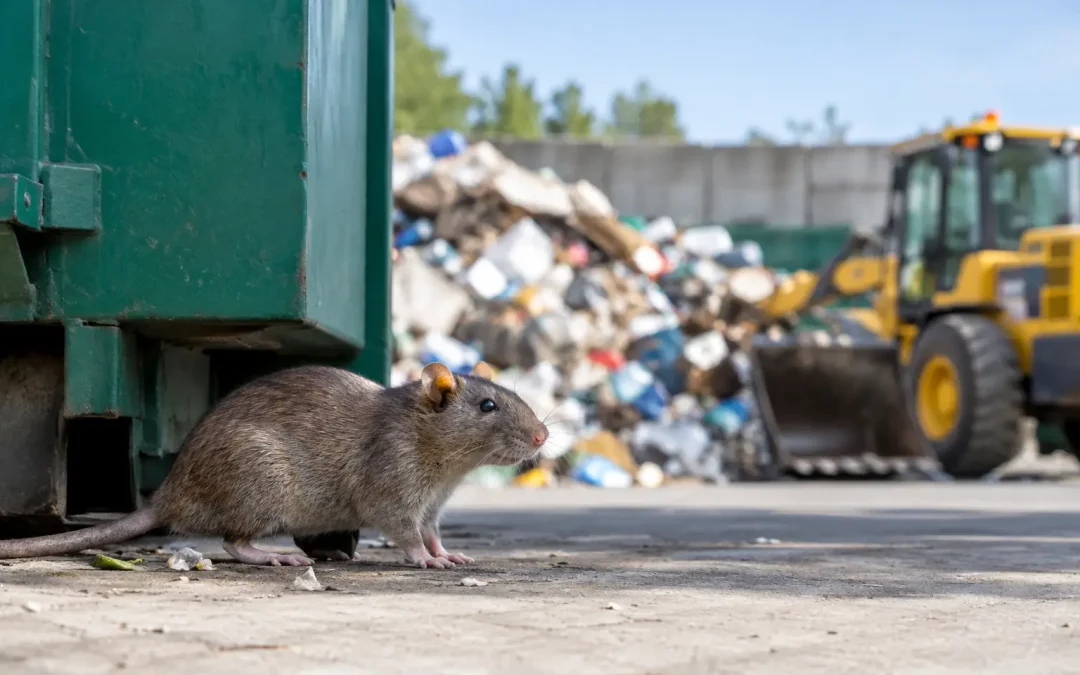
Rats and mice do not need an untidy site to become a serious problem. A waste transfer station, recycling plant or landfill can provide food, warmth, harbourage and regular vehicle movement even where teams work hard to maintain standards. This waste facility rodent guide explains how operators can reduce risk, respond decisively to activity and maintain the records needed to protect hygiene, safety and business continuity.
For waste-sector managers, rodent control is not simply about placing bait stations around a perimeter. A single rat sighting can indicate a wider issue in stored materials, beneath cabins, around drainage routes or within structures. The right response begins with understanding how rodents use the site, then combining proofing, housekeeping, targeted treatment and documented follow-up.
Why waste facilities attract rats and mice
Waste sites present a changing food supply rather than one fixed source. Mixed waste, food residues, bird feed, spillages from compactors and residue around wash-down areas can all support rodents. Rats are particularly drawn to sheltered voids under skips, bundled materials, service ducts, vegetation and poorly maintained drainage. Mice may establish themselves closer to staff areas, offices, electrical rooms and welfare facilities where warmth and nesting materials are available.
Seasonality matters. During autumn and winter, falling temperatures push rodents towards enclosed, protected areas. This can increase activity around buildings, workshops, weighbridges and temporary site accommodation. However, a rodent issue at a waste facility can develop at any time of year when food and harbourage are consistently available.
The risk is not limited to visible contamination. Rodents can damage cables, insulation, packaging and stored supplies. They can contaminate surfaces with droppings and urine, introduce parasites, and create avoidable concerns during customer, insurer or regulatory visits. In sites handling waste from sensitive supply chains, poor control can also affect confidence in the operator’s wider hygiene arrangements.
Waste Facility Rodent Guide: Assess the Site Properly
An effective programme starts with a detailed in-person inspection. The purpose is to identify active signs, likely entry points and the conditions allowing rodents to remain on site. Treating activity without correcting those conditions may reduce numbers briefly, but it rarely provides lasting control.
A trained technician should inspect operational areas as well as obvious external boundaries. This includes waste storage zones, skip bases, drainage channels, balers, loading bays, fencing lines, vegetation, welfare buildings, stores and plant rooms. Particular attention should be paid to quiet areas that receive little footfall, where rodents can travel undisturbed.
Signs of activity include fresh droppings, rub marks along walls, gnawing, burrows, footprints in dust or mud, nesting materials and damaged bags or packaging. Rat burrows are often found close to walls, beneath stored materials or along banks and fence lines. Mice can pass through gaps that appear insignificant, especially around pipes, cable penetrations and damaged door seals.
The inspection should also consider the site’s operating pattern. Are waste loads arriving overnight? Is material held for longer at weekends? Are skips regularly overfilled? Does pressure washing move food residue into drainage routes? The answer affects where control measures are placed and how frequently the programme needs reviewing.
Separate evidence from assumptions
A rat seen near a waste pile does not automatically mean rats are nesting there. Equally, an absence of sightings does not prove a site is clear. Rodents are most active when people are absent, so evidence gathered during inspection is more reliable than informal reports alone.
Recording exact locations, types of evidence and changes between visits allows the site team to see patterns. This is especially valuable where several contractors, shifts or tenants use the same facility. Clear records turn rodent control from a reactive task into a managed hygiene process.
Remove the Conditions That Support Activity
Good housekeeping is one of the strongest forms of rodent prevention, but it needs to be practical for a working waste site. The aim is not perfection. It is to avoid creating stable food sources and sheltered nesting areas that rodents can rely on.
Waste should be contained wherever possible, with spillages cleared promptly from loading and sorting areas. Containers, bins and skips need lids or covers where their use allows, and damaged units should be repaired or replaced. Regular cleaning around compactors, balers and wash-down areas is essential because small amounts of residue can sustain rodent activity over time.
Stored materials also deserve attention. Keeping pallets, bags and equipment away from walls makes inspections easier and removes hidden travel routes. Scrap, redundant equipment and loose sheeting should not be left in undisturbed piles. Outside, vegetation should be managed so that grass, brambles and dense growth do not provide protected access to buildings or burrow sites.
Drainage is another common weak point. Broken grilles, damaged covers and poorly sealed pipework can provide routes into structures. Drainage repairs may sit outside the pest control contract, but identifying and reporting them quickly is part of a professional prevention programme.
Proofing must suit the operation
Proofing is often the difference between repeated treatments and durable control. Doors should close properly, brush strips should be intact, and gaps around services should be sealed with suitable materials. Air vents, drainage openings and other necessary access points may need protective measures that preserve ventilation and safe operations.
There is always a balance to strike. A busy loading bay cannot be permanently closed, and a waste operation cannot stop every movement of materials. In these cases, the most effective approach may be to focus on door discipline, rapid repairs, nearby harbourage removal and targeted inspection rather than relying on a single exclusion measure.
Use Treatment Carefully and Review It Often
Where active infestation is confirmed, treatment should be based on the level and location of activity, the presence of non-target animals and the nature of the waste operation. A professional programme may use secured control points, trapping and other appropriate methods alongside proofing and sanitation measures. The objective is to eliminate the infestation while reducing unnecessary exposure to people, pets, wildlife and the environment.
Rodenticide use requires particular care at waste sites. It should never be treated as a substitute for maintenance or housekeeping. If food waste remains freely available and rodents can burrow undisturbed, repeated baiting alone is unlikely to resolve the root cause. A competent provider will assess activity at each service, replenish or remove treatment as appropriate, and adapt the plan when evidence changes.
Follow-up visits matter because rodent behaviour can shift after treatment begins. Activity may move from an exposed waste area towards buildings, fencing or drainage runs. Reviewing results allows control measures to be adjusted before a localised issue becomes a site-wide problem.
Build Rodent Control Into Compliance and Site Management
For regulated businesses, a pest control folder should show more than a site plan with control points marked. It should provide a clear account of inspections, findings, treatment actions, recommendations, trend information and outstanding proofing or hygiene issues. This gives managers evidence that risks are being actively assessed and addressed.
The documentation should be useful to the people running the facility, not merely retained for an audit. Site managers need to know which corrective actions are theirs, who is responsible and when completion is expected. A recommendation to repair a door, clear a storage area or address drainage damage only protects the site when it is acted upon.
Staff awareness also makes a measurable difference. Employees do not need specialist pest control training to report a damaged vent, a gnawed cable, fresh droppings or a new burrow. A simple reporting route helps the responsible manager and pest control provider investigate before the issue becomes established.
At Pest Pure Solutions, commercial rodent programmes are tailored around the operational realities of sites across Dublin, Kildare, Wicklow and Meath. This includes detailed inspections, practical proofing advice and reporting that supports hygiene standards and accountable site management.
A well-run waste facility will always present some pest pressure. The goal is not to pretend that risk does not exist, but to recognise it early, remove the conditions rodents depend on and keep every action visible, proportionate and properly recorded. That approach protects the people working on site as effectively as it protects the operation itself.
Recent Comments