
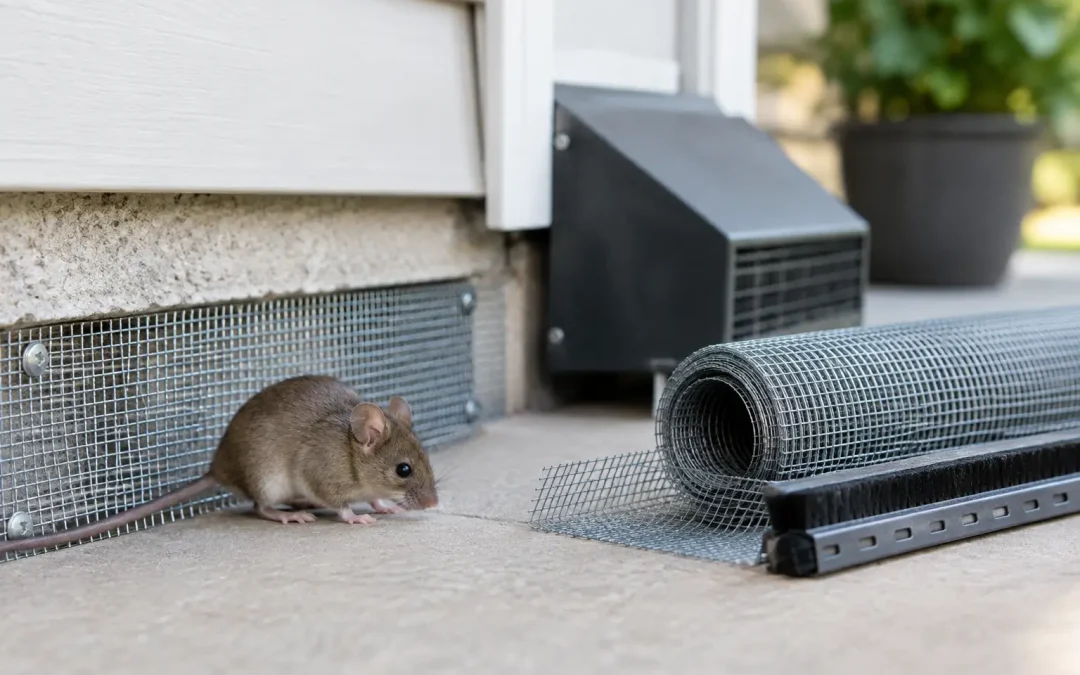
A mouse can enter through a gap little wider than a pencil, while rats will exploit broken drains, poorly sealed service points and unsecured waste areas. The best rodent barriers do more than make a building look sealed: they remove the routes, shelter and food sources that allow rats and mice to establish themselves indoors.
During winter, rodent proofing deserves particular attention. Colder weather drives rodents towards heated homes, kitchens, storerooms, plant rooms and voids around pipes. A trap or bait treatment can deal with active rodent activity, but effective prevention depends on finding out how animals are gaining access and closing those routes properly.
What makes the best rodent barriers effective?
A useful barrier is durable, fitted to the building and suitable for the location. It must withstand chewing, weather, cleaning and regular use without creating a new hygiene or fire-safety issue. Expanding foam alone, for example, may fill a visible opening, but rats and mice can often gnaw through it. It is not a reliable rodent barrier where there is an active access route.
The strongest approach combines physical exclusion with housekeeping and ongoing inspection. This matters for a family home, but it is especially important in catering, care, logistics, waste and regulated premises, where evidence of rodents can affect hygiene standards, operations and reputation.
A professional inspection considers the whole site rather than the most obvious hole. Rodent entry points are frequently hidden behind kitchen units, around utility pipes, below doors, inside roof voids, behind external cladding or around drainage connections. The visible signs may be indoors, while the route in is outside or below ground.
Best rodent barriers around the outside of a property
The building perimeter is the first line of defence. Walk slowly around the exterior and look at ground level, particularly where walls meet paving, paths, gardens, drainage channels and outbuildings. Fresh soil disturbance, rub marks, gnawing, droppings and small runs through vegetation can all indicate regular rodent movement.
Seal gaps around pipes, cables and service entries
Pipework and cables often create the most overlooked openings. A small gap around a water pipe beneath a kitchen sink can give mice direct access from an external wall cavity or underfloor void. Larger gaps around soil pipes, electrical services and heating lines can also allow rats to enter.
Use a rodent-resistant material such as suitable metal mesh, metal plates or a purpose-made collar, finished securely with an appropriate sealant or mortar where required. The right method depends on the substrate and whether the area is exposed to moisture, movement or heat. Proofing should be neat and maintainable, particularly in commercial premises where hygiene inspections are routine.
Protect air bricks and ventilation openings
Ventilation must remain functional. Blocking an air brick completely can lead to damp, poor airflow and damage to the property. Instead, fit properly secured rodent-proof mesh that allows air to pass while preventing entry.
Mesh selection matters. Large openings can allow mice through, while lightweight material may be bent or chewed. A durable metal mesh with small apertures is generally more reliable, but it must be installed so that it does not restrict the ventilation the building needs.
Fit effective door and loading-bay protection
Doors that do not meet the threshold properly are a common access point. This includes side doors, garage doors, bin-store doors, cellar entrances and delivery doors. Daylight visible beneath a door is often a warning sign, especially where food, packaging or waste is stored nearby.
For frequently used doors, hard-wearing brush strips or reinforced rubber seals can reduce gaps without stopping normal operation. In areas exposed to rat activity, a metal threshold plate or more substantial door repair may be needed. Loading bays require particular care because repeated deliveries, open doors and waste handling create opportunities for rodents to enter.
Keep vegetation and stored items away from walls
Dense planting, stacked timber, unused equipment and stored materials can provide cover beside a building. Rodents prefer to travel close to walls and under cover, so clearing a visible strip around the property makes activity easier to spot and less attractive.
This does not mean every garden must be stripped back. The aim is sensible access control: keep climbing plants from reaching rooflines, avoid piling bags or boxes against walls, and store firewood or materials raised off the ground and away from entrances.
Drain protection: a critical barrier for rats
Rats can travel through defective or accessible drainage systems. If rodent activity appears in a ground-floor kitchen, utility room, basement, bin area or near an inspection chamber, drainage should be considered as part of the investigation.
Broken pipework, displaced joints, damaged gullies and uncapped drainage points may create access from the sewer system into a property. A professional assessment can identify whether the concern is likely to be drainage-related and whether a drain survey or repair is required. Where suitable, properly fitted drainage protection can help prevent upward access, but it must never compromise drainage flow or maintenance access.
For commercial sites, drain covers and chambers should be kept in sound condition and checked as part of a planned pest-management programme. A missing cover or damaged gully may look like a minor maintenance issue, yet it can create a direct route for rats and attract them with standing water or food debris.
Internal barriers that protect kitchens, stores and voids
Once the exterior has been addressed, internal proofing prevents rodents from moving further into sensitive areas. This is particularly valuable in food preparation spaces, medicine storage areas, staff kitchens, care environments and warehouse stock areas.
Focus on voids behind appliances, beneath fitted units, around pipe risers and at the edge of suspended ceilings. Rodents favour quiet, undisturbed routes and will use gaps behind dishwashers, fridges, boilers and shelving. A good proofing repair closes the gap while allowing safe access for servicing or maintenance where needed.
Food should be kept in sealed, rodent-resistant containers, including dry goods, pet food and bird feed. Waste must be contained, and bins should have close-fitting lids. Cleaning beneath equipment and around storage areas removes crumbs and residues that can sustain a rodent population long after the original entry point has been found.
Why barriers alone may not solve an existing infestation
Rodent proofing is prevention, not a substitute for treating a current infestation. Sealing a route without first understanding whether rodents are already inside can trap activity within wall voids, ceiling spaces or occupied areas. Equally, closing only one hole may simply redirect rodents to another weak point.
Signs that professional treatment and inspection are needed include fresh droppings, scratching noises after dark, gnawed packaging, grease marks along skirting boards, chewed cables or repeated sightings. Rats and mice can contaminate food and surfaces, while damaged wiring presents an additional safety concern.
A trained pest controller can assess the extent of activity, identify likely entry routes, carry out appropriate treatment and recommend proofing in the right sequence. For businesses, documented inspections and clear recommendations also support hygiene due diligence and help demonstrate that risks are being actively managed.
A practical barrier plan for homes and commercial premises
The most effective programme is based on regular checks rather than a single repair. Review doors, vents, pipe entries, drainage points, roofs, storage areas and waste locations after storms, building works or changes to how a site is used. New cable installations, damaged mortar, altered landscaping and overflowing bins can all create fresh opportunities.
For homeowners, an annual inspection before or during winter is a sensible precaution, especially in older properties or homes near fields, waterways, restaurants or busy waste areas. For commercial premises, inspection frequency should reflect the level of risk, the nature of the operation and any regulatory requirements.
Pest Pure Solutions provides practical rodent inspections, treatment and proofing advice for properties across Dublin and the surrounding counties. The right barrier plan is not about applying the same material to every gap. It is about locating the genuine risk points and making each one difficult for rodents to use.
A well-proofed property is quieter, cleaner and easier to protect. If there are signs of current activity, arrange an inspection before making major sealing repairs, so treatment and exclusion can work together safely.
Recent Comments