
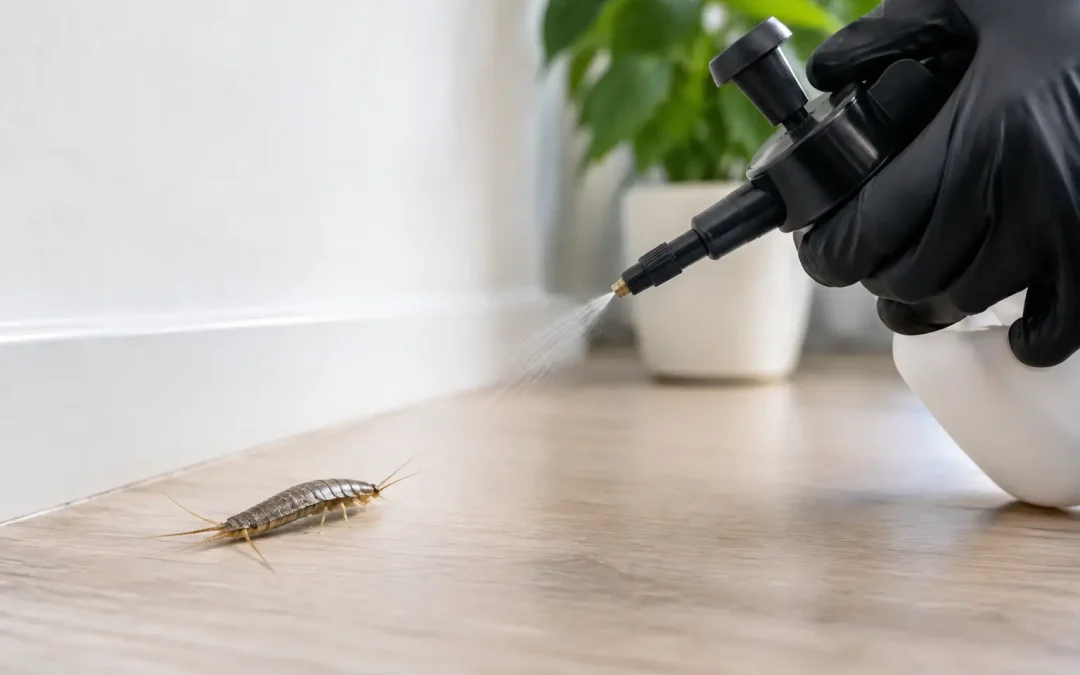
Silverfish are often first spotted when a bathroom light goes on late at night or when a box of stored papers is moved. They are quick, discreet and strongly associated with damp, undisturbed areas, which means an infestation can develop before it becomes obvious. Professional silverfish treatment Kildare property owners can rely on should do more than remove the insects seen on the day. It should identify why the property is supporting them and reduce the conditions that allow them to return.
Why silverfish are appearing in your property
Silverfish need moisture, shelter and access to suitable food sources. Bathrooms, utility rooms, kitchens, hot-press cupboards, basements and poorly ventilated storage areas are common harbourages. They may also settle behind skirting boards, under flooring, around pipework, inside wall voids and among cardboard, books or paper products.
A small number of sightings does not always mean there is a severe infestation. However, regular sightings, especially in more than one room, usually indicate that silverfish have established themselves in hidden areas. Their presence can also point to excess humidity, condensation, a leak or a ventilation issue that deserves attention in its own right.
In homes, silverfish can damage books, photographs, wallpaper, stored clothing and dry food packaging. In commercial premises, the concern is often wider. Care settings, catering operations, warehouses, offices and regulated facilities need to protect hygiene standards, stock, records and reputation. Even where silverfish are not the most serious pest risk, repeated activity should not be ignored.
Signs you may need silverfish treatment in Kildare
Silverfish are wingless, teardrop-shaped insects with a silvery-grey appearance and three fine bristles at the rear. They move rapidly and prefer darkness, so live sightings tend to happen at night or when furniture and stored items are disturbed.
Other signs can be less obvious. You may notice irregular grazing marks on wallpaper or paper, small holes in stored fabrics, damage to the glue of book bindings, or yellowish staining and shed skins in secluded areas. In a business setting, staff may report insects around washrooms, staff kitchens, storage rooms or service risers.
It is worth remembering that not every small insect is a silverfish. Firebrats and some other household insects can look similar, while carpet beetle larvae cause different forms of fabric damage. Correct identification matters because treatment and prevention measures vary. A professional inspection avoids spending time and money on the wrong solution.
What a professional silverfish treatment involves
Effective control begins with a detailed inspection. A technician should assess the extent of activity, likely entry points, harbourage areas and the environmental conditions attracting the insects. This includes checking around plumbing, seals, floor edges, voids, stored materials and areas where moisture may be trapped.
The treatment plan depends on the property and level of activity. Targeted professional products may be applied to suitable cracks, crevices and harbourage points, rather than broadly treating every visible surface. This approach is more precise and helps address insects travelling through concealed routes. Advice on preparation, access and re-entry will be provided where necessary.
One treatment can be sufficient for a minor, localised issue, particularly where the moisture source is resolved quickly. Established activity across several rooms, or a building with extensive voids and shared service routes, may need follow-up visits. Silverfish eggs and hidden harbourages are the reason a treatment programme is sometimes more effective than a single visit.
At Pest Pure Solutions, treatment is built around inspection, targeted control and practical prevention advice. For commercial clients, the service can also support site hygiene procedures and provide clear reporting appropriate to the premises and its operational requirements.
Why moisture control is part of the solution
Insecticide treatment alone may reduce visible activity, but silverfish can return if the environment remains consistently damp. This is the trade-off many property owners miss: treating the insect is necessary, while correcting the conditions that support it is what makes the result last.
Start by investigating persistent condensation, leaking pipes, defective seals, blocked vents and poor airflow. In bathrooms and utility areas, using extraction properly and allowing wet surfaces to dry can make a meaningful difference. A dehumidifier may be useful in some properties, but it is not a substitute for repairing an active leak or improving inadequate ventilation.
Stored cardboard, old newspapers and clutter can provide shelter as well as food. Reducing unnecessary storage in damp areas, keeping boxes off the floor and using sealed plastic containers for documents or seasonal items removes many of the places silverfish favour. These measures are particularly useful in flats, rental properties and older homes where access to building fabric may be limited.
When DIY measures are unlikely to be enough
Cleaning and reducing humidity can help with very early activity, but household sprays are rarely a reliable answer to an established silverfish problem. The insects spend most of their time inside voids and behind fixtures, rather than crossing open floor space. Treating only the insects you can see leaves the main harbourage untouched.
Avoid mixing products or applying them heavily around food areas, children’s belongings or pet spaces. This can create unnecessary exposure without improving control. If silverfish continue to appear after cleaning and moisture-reduction efforts, or if the source cannot be identified, a professional assessment is the sensible next step.
Landlords and managing agents should also take repeat reports seriously. Recurring activity may involve plumbing routes, common areas or dampness within the building structure, rather than a housekeeping issue in one individual flat. A clear inspection record helps establish where responsibility and remedial work are needed.
Silverfish control for commercial premises
For businesses, silverfish management should fit the realities of the site. A catering kitchen, care home, pharmaceutical facility and logistics warehouse have very different access arrangements, hygiene controls and documentation needs. The central principle is the same: inspect thoroughly, treat discreetly, correct conducive conditions and retain a clear record of action taken.
In high-governance environments, a silverfish sighting can prompt questions from auditors, customers or internal quality teams. A structured service provides evidence that the issue has been assessed and addressed. Site-specific reports can record findings, treatment areas, recommendations and actions required from facilities or maintenance teams.
This is also why prevention should not sit solely with cleaning staff. Facilities management, maintenance, operations and hygiene teams may all need to act. For example, cleaning can reduce debris and clutter, but maintenance may need to repair a leak, seal a pipe penetration or improve extraction. Coordinated action closes the gap that allows pests to persist.
Preventing silverfish from returning
Once treatment is complete, regular checks help ensure the issue stays controlled. Look behind bathroom furniture, around pipework, in linen cupboards and beneath sinks, particularly during periods of damp weather or after plumbing work. Respond early to water leaks and avoid leaving wet towels, bathmats or cleaning materials in enclosed spaces for long periods.
Keep storage areas dry, orderly and accessible for inspection. Where gaps around pipes, skirting boards or service penetrations are identified, suitable proofing can reduce routes into voids. Proofing should be carried out alongside treatment, not used as a shortcut when silverfish are already active behind finishes.
Silverfish are persistent because they are good at staying hidden, not because they are impossible to control. Prompt inspection, targeted treatment and attention to moisture give Kildare homeowners and businesses the best chance of resolving the problem properly. If sightings are continuing, arranging a professional survey and free quotation is a practical way to protect the condition, hygiene and comfort of your property.
Recent Comments