
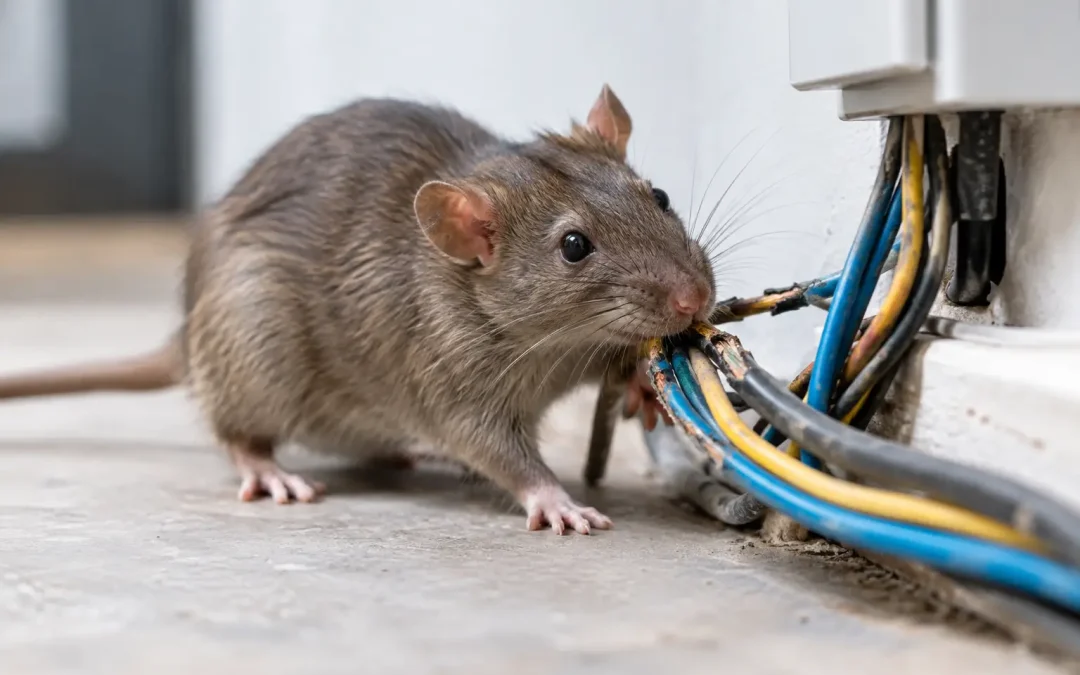
A boiler stops working on a cold morning. A security alarm develops a fault. Lights flicker in a storeroom with no obvious cause. In some properties, the question behind these costly problems is simple: do rats chew wiring? Yes. Rats can gnaw through electrical cables, appliance leads and data wiring, creating a genuine fire, safety and operational risk.
During winter, rats move indoors in search of warmth, food and shelter. Lofts, wall voids, suspended ceilings, plant rooms, kitchens and service ducts give them protected routes through a building – and wiring is often directly in their path. Fast action matters, particularly where children, tenants, vulnerable residents, food handling or business continuity are involved.
Why rats chew electrical wiring
Rats do not chew cables because they are attracted to electricity. They chew because their front teeth grow continuously throughout life. Gnawing on hard materials helps wear those teeth down. Plastic cable coverings, rubber insulation, timber, pipe lagging and cardboard can all be damaged as a result.
Electrical wiring is also commonly installed in concealed, quiet areas where rats travel and nest. A rat entering through a gap around a pipe or damaged air brick may follow the same void that contains cables. Once an infestation is established, repeated gnawing and nesting activity can affect more than one area.
The risk depends on the property and the scale of activity. A single rat passing through does not always mean cable damage, but droppings, greasy rub marks, gnawed materials and recurring noises in walls or ceilings should never be dismissed. Where wires are exposed, loosely protected or located near a nest, the risk increases considerably.
Do rats chew wiring in homes and businesses?
They can, and the consequences vary. In a home, damage may affect appliance leads, lighting circuits, internet cables, heating controls or wiring in a loft. In older properties, concealed voids and historic gaps around utilities can provide particularly easy access.
For businesses, the impact can be more serious. Rats may damage wiring serving refrigeration, alarms, communications equipment, machinery, extraction systems or fire safety equipment. In catering premises, care settings, warehouses and regulated sites, a rodent incident can also raise hygiene, audit and reputational concerns.
It is not safe to assume an electrical fault has been caused by rodents, nor is it safe to investigate damaged live cables yourself. If you suspect chewed wiring, isolate the affected circuit only if it is safe to do so, avoid touching exposed cable, and arrange assessment by a qualified electrician. Pest control and electrical repair are separate but connected jobs: the damaged cable must be made safe, while the rodent entry point and infestation must be dealt with to prevent repeat damage.
The fire and safety risks of chewed cables
Cable insulation exists to keep electrical conductors separated and protected. When rats remove or pierce that covering, they can expose live components or weaken the cable enough for a fault to develop later. This may lead to short circuits, tripped breakers, equipment failure, electric shock hazards or overheating.
The most concerning cases are often hidden. Wiring in loft insulation, behind kitchen units, beneath floors or above ceilings may continue to operate after partial damage. A chewed cable can therefore go unnoticed until there is a smell of burning, a power failure or a more serious incident.
Never handle a cable that appears damaged, even if the appliance is switched off. Do not use tape as a permanent repair, and do not continue using an appliance with a chewed lead. Where there is smoke, sparking, burning odour or immediate danger, leave the area if necessary and contact the emergency services. An electrician should inspect the electrical installation before it is used again.
Signs rats may be damaging wiring
A power problem on its own is not proof of rats. However, electrical faults combined with evidence of rodent activity should be treated as urgent. You may notice scratching or movement in ceilings and wall cavities, especially after dark, alongside fresh droppings in cupboards, lofts, utility rooms or near stored goods.
Gnaw marks are another clear warning. Rats often leave rough-edged tooth marks on cable insulation, plastic pipework, packaging, wood and skirting. Shredded insulation, paper, fabric or cardboard may indicate nesting material. A stale, ammonia-like smell can also develop in enclosed spaces with active rodent activity.
In commercial premises, inspect areas behind equipment, around electrical intake points, loading bays, waste storage areas, false ceilings and staff kitchen facilities. These locations can combine food residue, shelter and utility penetrations. Staff should report sightings, droppings and unusual equipment faults promptly rather than moving evidence or attempting an unplanned treatment.
What to do if you find chewed wiring
First, make the area safe. Keep people and pets away from damaged cables and unplug an affected appliance only if the plug and surrounding area are safe to access. If the cable is fixed wiring, such as a circuit in a wall, ceiling or consumer unit, seek advice from a qualified electrician rather than attempting a repair.
Next, preserve enough evidence to identify the source of the problem. Take a photograph from a safe distance if possible, then look for rodent signs nearby without entering confined spaces or disturbing damaged electrical installations. This can help establish whether the fault is linked to rats, mice or another cause.
The final step is to address the infestation professionally. Poison alone is rarely a complete solution. Effective rodent control should identify where rats are entering, what is sustaining them, where they are travelling and whether there are nesting locations within the building. Treatment must be matched to the site, the level of activity and the presence of children, pets, food or sensitive operations.
Preventing rats from reaching cables
Prevention starts outside the building. Rats can enter through surprisingly small gaps around pipes, drains, vents, doors and damaged brickwork. Keeping external areas tidy, managing waste properly and repairing building defects reduces the opportunity for rodents to establish themselves close to the property.
Inside, avoid storing food in unsealed packaging and clear crumbs or spills promptly, especially behind appliances and in staff areas. Do not allow clutter to build up in lofts, storerooms or plant spaces, as it gives rats cover and nesting material. Cables should be routed and protected appropriately where practical, particularly in accessible service areas.
For landlords and facilities managers, routine inspections are worthwhile before the coldest part of winter. Check door sweeps, damaged vents, service penetrations, bin areas and evidence around electrical cupboards. In high-risk or regulated environments, documented inspections and a tailored pest management programme provide a stronger safeguard than reacting only after a sighting or equipment failure.
Why proofing matters as much as treatment
Removing active rats is essential, but it will not resolve the underlying issue if access remains open. A building with food sources, harbourage and entry gaps can attract rodents again quickly, even after a successful treatment.
Professional proofing focuses on the routes rats actually use. This might include sealing gaps around service pipes, repairing damaged vents, improving door protection or addressing defects identified during an inspection. The correct approach depends on the construction of the building and must not block essential ventilation or interfere with drainage and utilities.
Pest Pure Solutions provides professional rodent inspections, treatment and proofing for homes and businesses across Dublin and surrounding counties. For commercial sites, the service can also support hygiene standards, site records and practical preventative action where a rodent issue could affect operations or compliance.
If you have found gnawed cable insulation, rodent droppings near electrical equipment or repeated scratching in the same area, treat it as a prompt to act rather than a problem that may disappear. Making the wiring safe and removing the reason rats are inside protects the property well beyond the current winter season.
Recent Comments