
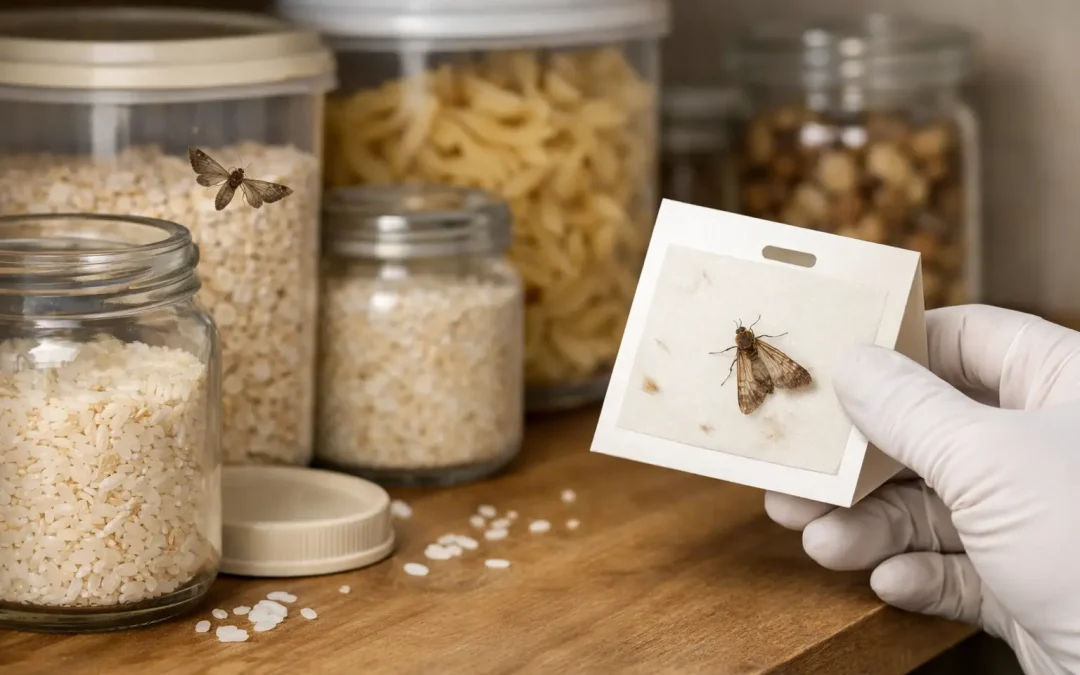
A moth flying from a kitchen cupboard or warehouse racking is rarely an isolated nuisance. In food areas, adult moths are often the visible sign of larvae feeding unnoticed inside dry goods, packaging seams or forgotten stock. Effective moth control in food storage means finding the source, removing contaminated materials safely and preventing the next breeding cycle.
For households, an infestation can quickly spread through flour, cereals, rice, dried fruit, pet food and bird seed. For catering, care, logistics and food-handling businesses, the consequences are wider: contaminated stock, failed audits, customer complaints, waste and potential damage to reputation. The right response depends on the scale of the issue, the type of premises and how food is received, stored and rotated.
Why food storage moths are difficult to eliminate
The moths found in stored food are not usually clothes moths. Species commonly associated with dry food products include the Indian meal moth, Mediterranean flour moth and warehouse moth. The adult moth does not cause the main damage. It is the larva that feeds on product, leaves webbing and contaminates goods with skins and droppings.
A female can lay eggs in or close to a suitable food source. Once larvae hatch, they may enter packets through tiny gaps or exploit poor seals. They can also crawl away from the food before pupating, appearing on walls, ceilings, shelf brackets and around cupboard hinges. This makes a treatment that only targets visible flying moths unreliable.
Temperature, food availability and undisturbed storage all affect how quickly the population grows. Heated homes and commercial premises can support breeding throughout much of the year. A single missed packet at the back of a cupboard, or a pallet of slow-moving ingredients, can allow the problem to return after an apparently thorough clean.
Signs that action is needed
Webbing is one of the clearest warning signs. It may appear as fine silk threads inside flour, cereal, nuts, dried fruit or animal feed, sometimes causing the product to clump together. Small larvae, cocoons in corners and moths resting near food stores are also significant indicators.
In commercial environments, signs may be less obvious because stock moves through larger areas. Inspect incoming deliveries, damaged outer packaging, high-level shelving, racking joints, spill zones and areas beneath pallets. A pattern of moth catches in monitoring traps can identify activity before product contamination becomes visible, but traps are a monitoring tool rather than a complete treatment on their own.
Any food suspected of contamination should be isolated immediately. Do not assume that an unopened cardboard box or thin plastic packet is protected. Larvae can be present before a product reaches the premises, and some packaging is easily compromised during storage and handling.
Moth control in food storage: the correct first steps
The immediate priority is to stop larvae moving into clean stock. Empty the affected cupboard, store room or defined racking section methodically. Check every dry product, including items that are rarely used. This includes baking ingredients, tea, spices, soup mixes, chocolate, dried herbs, pet food and food stored in decorative containers.
Dispose of infested goods in a sealed bag and remove them from the building promptly. For a domestic cupboard, vacuum shelves, corners, drill holes, hinges and crevices, then dispose of the vacuum contents outside straight away. Wash hard surfaces thoroughly and allow them to dry before restocking. Cleaning removes food debris and potential eggs, but it must be detailed enough to reach the hidden areas where larvae may pupate.
Avoid spraying insecticide directly around exposed food or using household treatments as a substitute for source removal. This can create unnecessary hygiene concerns while leaving the infested stock in place. In food businesses, any pesticide use must be carefully selected, applied by a competent professional and documented within the site’s pest management and food safety procedures.
Prevention starts with better storage practices
Once the source has been removed, storage standards determine whether the infestation returns. At home, transfer susceptible dry goods into clean, rigid containers with tight-fitting lids. Glass, metal or durable food-grade plastic containers are generally more dependable than folded paper, cardboard or thin film packaging.
Commercial sites need a broader process. Good stock rotation, controlled intake checks, clean spill management and separation of damaged goods all reduce the risk. Food should be kept off the floor where possible and stored so staff can inspect behind and beneath it. Overstocking may seem convenient, but it reduces visibility and creates sheltered areas where activity can continue unnoticed.
The following controls are particularly useful where food is stored in volume:
- inspect deliveries for damaged packaging, webbing and insect activity before stock enters the main store;
- maintain clear stock rotation using first-in, first-out principles and investigate slow-moving lines;
- keep shelving, pallet locations, floor edges and high-level ledges free from product spills and dust;
- use suitable monitoring traps, mapped and checked at planned intervals;
- record sightings, catches, corrective action and disposal decisions for traceability.
The level of monitoring should match the risk. A family kitchen may need careful storage and occasional checks. A catering kitchen, care home, pharmaceutical support area or logistics facility handling food products may require a planned programme with regular inspections, trend analysis and documented recommendations.
When professional treatment is the safer option
Professional support is advisable when moths reappear after cleaning, the source cannot be located, activity extends beyond one cupboard or store, or the premises has food safety and compliance obligations. The same applies where there is a large quantity of stock at risk or where the infestation may have arrived through a supply chain issue.
A professional inspection should look beyond the adult moths. It should assess likely entry points, food sources, stock condition, storage layout, housekeeping standards and areas where larvae may travel to pupate. Treatment may include targeted residual applications in appropriate non-food areas, insect growth control measures where suitable, pheromone monitoring and intensive sanitation recommendations. The exact method depends on the species, life stage, environment and the controls already in place.
For regulated businesses, the value is not limited to removing moths. Clear site reports, trend data and corrective actions help demonstrate that pest risks are being actively managed. This is particularly relevant where hygiene audits, customer standards or GDP-related reporting place close scrutiny on storage conditions.
Pest Pure Solutions provides discreet professional inspections and tailored moth management for homes and commercial premises across Dublin and surrounding counties. A planned approach can combine treatment, proofing advice, monitoring and reporting rather than relying on repeated reactive call-outs.
Common mistakes that allow moths to return
The most frequent mistake is keeping one questionable packet because it appears mostly unaffected. Eggs and early-stage larvae are easy to miss, so retaining suspect food can restart the infestation. Another is cleaning shelves but overlooking ceiling edges, cracks and nearby drawers where larvae may have pupated.
It is also easy to rely too heavily on pheromone traps. They are valuable for identifying and monitoring certain moth species, yet they do not remove eggs or larvae from food. A rising trap count should trigger inspection and corrective action, not simply the replacement of the trap.
Finally, do not restock immediately with loose packets and assume the problem has gone. Keep fresh products protected, maintain a sensible rotation routine and inspect the area over the following weeks. The aim is not merely to stop moths flying around the room. It is to break the breeding cycle before contaminated food, stock loss or hygiene concerns develop again.
A clean, well-organised food store is one of the strongest defences against moth activity. When there is uncertainty about the source or the risk to stock, early professional assessment is usually far less disruptive than allowing a small infestation to become an established problem.
Recent Comments