
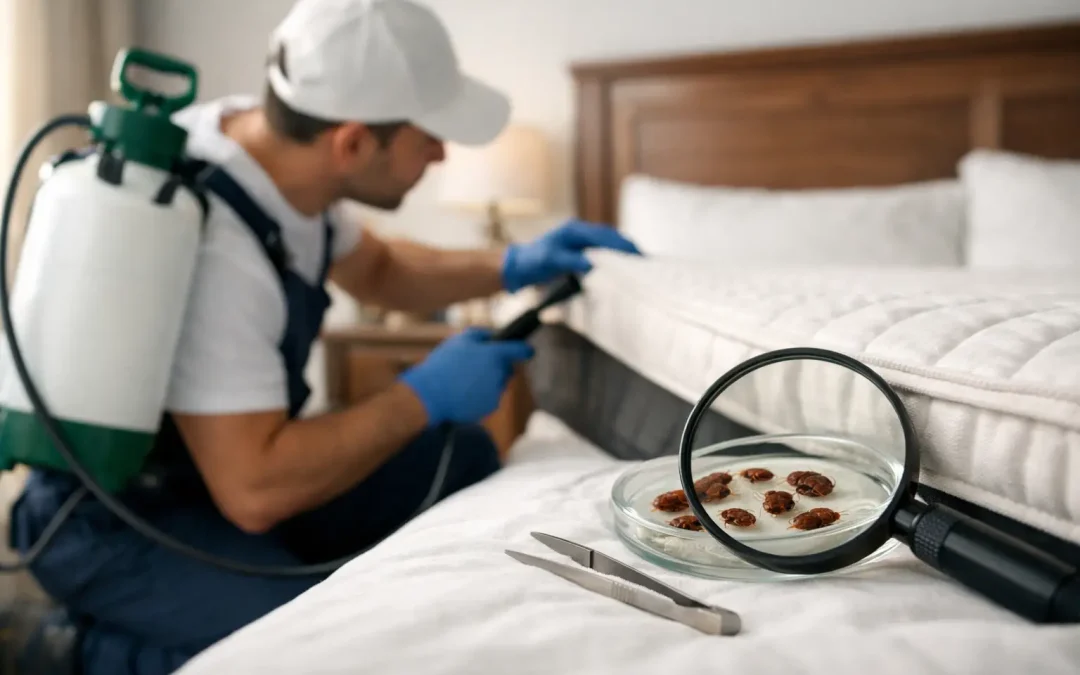
You usually do not spot bed bugs first. You notice the pattern instead – bites that appear overnight, tiny marks on bedding, or a nagging feeling that sleep has become a problem. When that happens, finding a bed bug exterminator Kildare property owners can rely on becomes less about convenience and more about getting the issue handled properly before it spreads.
Bed bugs are persistent, highly mobile and easy to carry from one location to another without realising it. They do not appear because a home or business is unclean. They appear because they are good at hiding, feeding and staying out of sight until numbers increase. That is exactly why professional treatment matters.
When to call a bed bug exterminator in Kildare
A delay usually makes the problem harder, not cheaper. Bed bugs can move between bedrooms, soft furnishings, luggage, clothing and adjoining rooms. In some settings, they can also create wider risk – particularly in guest accommodation, rental properties, care settings and any business where hygiene standards and reputation matter.
The earliest signs are often subtle. People may wake with irritated skin, but bites alone are not reliable proof. Some people react strongly, while others show little or no visible reaction. More dependable indicators include dark spotting on mattresses or bed frames, shed skins, tiny pale eggs in cracks and seams, or live insects around headboards, divan bases and nearby furniture.
If there is any doubt, inspection should come before guesswork. Spraying random shop-bought products around a bedroom can scatter insects deeper into the room and make treatment less straightforward. A professional assessment gives you a clearer picture of the infestation level, the affected areas and the most suitable treatment approach.
What a professional bed bug exterminator Kildare service should actually do
A proper bed bug service is not just a quick spray and a promise. It should begin with a detailed inspection, because treatment only works well when the harbourage points are identified. Bed bugs hide in mattress seams, bed frames, skirting edges, bedside units, upholstered furniture, curtain folds and even behind loose wallpaper or electrical fittings.
For domestic clients, the aim is to eliminate active infestation while reducing disruption as much as possible. For landlords and commercial operators, the requirement often goes further. The response must also be discreet, documented and carried out in a way that protects occupants, staff, guests and operational standards.
A dependable provider will explain what has been found, what preparation is required before treatment, how many visits may be needed and what realistic outcomes look like. Bed bug control is one of those services where honesty matters. Severe infestations may require follow-up visits, and anyone claiming otherwise without inspection is not giving you the full picture.
Why bed bugs are difficult to remove without expert treatment
Bed bugs are difficult for three main reasons. First, they hide in extremely narrow spaces and often stay close to where people sleep or rest. Second, eggs can be tucked away in locations that are easy to miss. Third, some infestations seem small on the surface but extend beyond the bed itself.
DIY treatment often fails because it focuses only on visible insects. Killing a few active bugs on a mattress does not address the population behind furniture, within joints, under edges or in adjoining soft furnishings. It can also create a false sense of progress, which allows the infestation to continue for longer.
There is also the issue of resistance and misuse. Using the wrong product, applying it incorrectly, or overapplying chemicals in sleeping areas can create safety concerns without solving the root problem. Professional pest control is not just about stronger products. It is about knowing where to treat, where not to treat, and how to build a complete response around inspection, application, monitoring and follow-up.
How bed bug treatment typically works
Treatment starts with preparation. Occupants are usually asked to reduce clutter, bag affected linens and clothing, and make key areas accessible for inspection and treatment. Good preparation supports better results, because hidden harbourages become easier to access.
The treatment itself depends on the level of infestation, the property type and the affected rooms. In many cases, a targeted insecticidal treatment is applied to key harbourage points rather than broad, unnecessary spraying. The emphasis should always be on thoroughness and safe, controlled application.
Follow-up is often part of the process. This is not a sign that treatment has failed. It is part of managing the insect life cycle properly. Eggs may hatch after the initial visit, so a second inspection or treatment can be necessary to fully break the infestation. A professional contractor should be clear about this from the outset.
For businesses, treatment may also need to be arranged around operational demands. That means discreet scheduling, clear reporting and practical advice on preventing recurrence. In regulated environments, record-keeping and hygiene protection are just as important as the immediate kill.
Domestic and commercial bed bug problems are not the same
A homeowner dealing with bites in one bedroom needs a fast, effective service and sensible guidance. A commercial operator may be balancing a bed bug incident with occupancy pressures, staff concerns, customer impact and compliance obligations. The pest is the same, but the response cannot be identical.
In hotels, guest houses and short-stay accommodation, bed bugs can quickly become a reputation issue. In care environments, they require especially careful handling because vulnerable occupants may be affected. In rental properties, delays can create disputes between occupants, landlords and property managers if the source and spread are not assessed properly.
This is where a more technical pest control partner becomes valuable. Pest Pure Solutions works across domestic and commercial environments, including settings where reporting, discretion and hygiene standards are essential, not optional. That wider operational experience matters when a pest issue carries business risk as well as discomfort.
How to prepare before the exterminator arrives
Preparation should be practical, not frantic. Start by stripping affected beds and placing linen, clothing and soft items from the room into sealed bags until laundering instructions are followed. Avoid carrying loose items through the property, as that can spread the infestation.
Do not move mattresses, chairs or bedside furniture into other rooms unless advised to do so. Bed bugs are excellent hitchhikers. Trying to isolate the problem without a plan can simply relocate it. It is usually better to leave suspected items in place for inspection.
Vacuuming can help reduce loose insects and debris, but it should not replace treatment. If you vacuum around affected areas, empty the contents safely afterwards into a sealed bag. Most importantly, follow the preparation instructions given by the pest control provider, because different properties and treatment methods may require different steps.
What to look for after treatment
Aftercare is part of successful control. You may still see signs of activity for a short period, particularly if follow-up treatment has been planned. That does not automatically mean the service has not worked. The key is whether activity is reducing and whether the provider has given clear guidance on expected timelines.
Avoid the temptation to introduce your own additional chemicals after professional treatment unless specifically instructed. Mixing products or interfering with treated areas can reduce effectiveness. Keep rooms organised, continue with any laundering guidance and report ongoing concerns accurately so follow-up can be focused where needed.
If the infestation began after travel, a guest stay or second-hand furniture purchase, review those pathways carefully. Prevention is never perfect, but small checks can make a difference. Inspect luggage after trips, be cautious with used furnishings and act quickly if fresh signs appear.
Choosing the right service
If you are comparing providers, do not judge on price alone. Bed bug control depends on inspection quality, technical knowledge, safe treatment methods and realistic follow-up planning. Ask whether the service covers full room assessment, whether further visits may be needed, and what advice is provided after treatment.
For commercial sites, it also makes sense to ask about reporting, discretion and wider pest management capability. Businesses often need more than a one-off visit. They need a contractor who understands hygiene risk, audit expectations and how pest incidents affect operations.
The main thing is not to wait for certainty before acting. Bed bugs rarely improve on their own, and early professional intervention usually gives you the best chance of resolving the problem with less disruption. If sleep has changed, signs are appearing, or occupants are reporting bites, getting an expert inspection is the sensible next step.
Recent Comments