
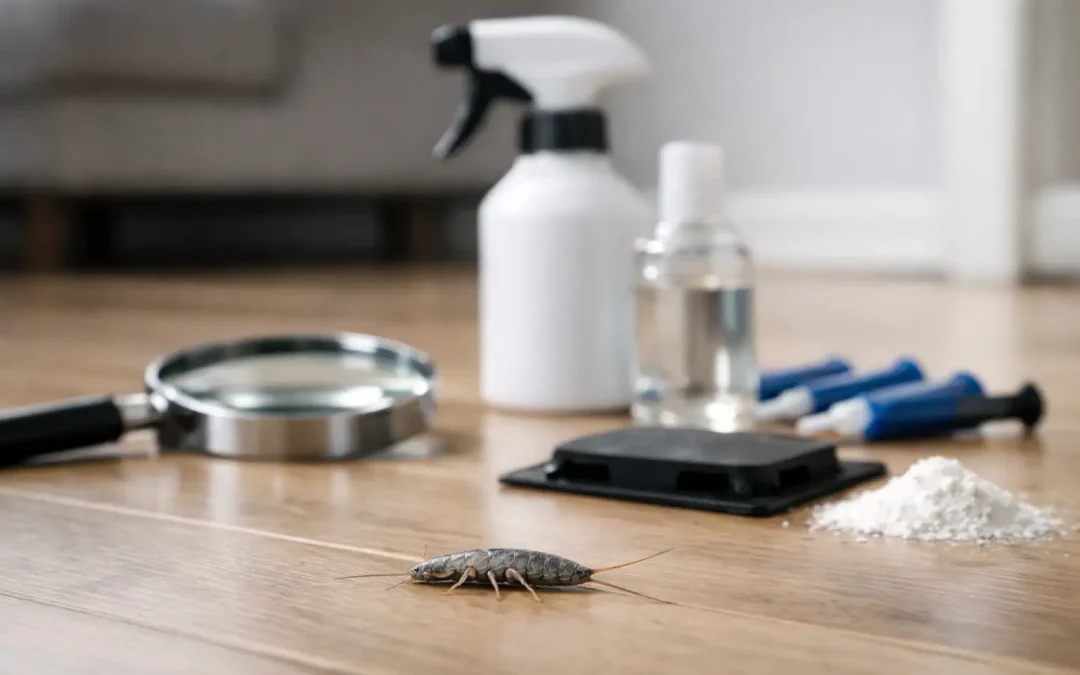
If you keep finding tiny silvery insects darting across the bathroom floor or tucked behind stored cardboard, a silverfish treatment review is usually less about choosing a single product and more about understanding why they are there in the first place. Silverfish are persistent because they are drawn to the exact conditions many properties accidentally provide – moisture, darkness, paper, glue, fabrics and quiet undisturbed spaces.
That is why treatment results can vary so widely. A spray may reduce visible activity for a few days, while the population carries on behind skirting boards, under flooring edges or inside wall voids. In homes, that can mean recurring sightings in bathrooms, kitchens, loft spaces and airing cupboards. In commercial settings, particularly where stock, packaging, archived records or hygiene standards matter, silverfish can become more than a nuisance.
A practical silverfish treatment review
The first point to make is simple. Silverfish are not usually controlled well by cosmetic treatment alone. If the room still has excess humidity, cluttered harbourage and easy access to food sources such as paper products, starch residues or stored textiles, the insects will often return.
A proper review of treatment options has to consider four things together: immediate knockdown, residual control, environmental correction and proofing. Miss one of those, and the result is often short-lived.
Sprays and aerosols
Ready-to-use insecticidal sprays are often the first step people try. They can be useful when applied directly into cracks, crevices and movement routes, and they may reduce active numbers quickly. For a light issue in a small domestic area, that can give visible improvement.
The limitation is coverage. Silverfish hide in narrow gaps around pipework, behind tiles, inside fitted units and under flooring edges. Surface spraying the open floor or skirting front rarely reaches the core harbourage. There is also a risk of over-applying products in the wrong places, especially in kitchens, bathrooms or around sensitive areas.
For that reason, sprays can play a role, but they are not usually the strongest standalone option when activity is established.
Insecticidal dusts
In many real-world cases, dust formulations are more effective than people expect. When placed correctly into voids, cracks, electrical trunking access points, wall gaps and other concealed harbourage, dusts can remain active for longer and reach places liquid products do not.
This matters because silverfish spend much of their time out of sight. A treatment that continues working inside harbourage is often more valuable than one that only affects insects seen in the open. The trade-off is that dusts need careful professional placement. In the wrong hands, they can be messy, poorly targeted or unsuitable for the environment.
For businesses, especially in regulated premises, product choice and application method need to be considered carefully. Treatment is not just about efficacy. It must also be appropriate for the site, the risk profile and any hygiene or audit requirements.
Monitoring traps
Sticky traps are useful, but mainly as a monitoring tool rather than a full treatment. They help confirm where activity is strongest, whether numbers are dropping and whether silverfish are moving from one area to another. In flats, offices, stores and service corridors, this can be especially helpful because sightings are often sporadic.
Traps on their own rarely solve the problem. They catch individuals, not the hidden population. Still, they are valuable as part of a more structured programme because they provide evidence instead of guesswork.
Why some silverfish treatments fail
Most treatment failures come down to one issue: the environment stays attractive to silverfish. Damp bathrooms, leaking pipework, condensation around window reveals, cluttered storage, stacks of paper, old cardboard and inaccessible voids all support ongoing activity.
This is why a treatment can appear to work at first and then disappoint. Visible insects are reduced, but eggs and hidden adults remain in place. Once the insecticide effect weakens or the untreated harbourage continues producing movement, the problem resurfaces.
There is also the issue of misidentification. Some customers assume they have silverfish when they are seeing firebrats or another moisture-loving crawling insect. The distinction matters because heat levels, harbourage preference and treatment emphasis can differ slightly. A professional survey helps avoid wasting time on the wrong approach.
The role of moisture control and proofing
A strong silverfish treatment review has to give proper weight to prevention. Silverfish thrive where humidity remains consistently high. That means bathrooms with poor extraction, kitchens with hidden leaks, utility rooms with limited airflow, plant rooms, basements and storage spaces with condensation problems often need attention alongside treatment.
Reducing humidity changes the environment that allows silverfish to breed and remain active. Better ventilation, repairing leaks, managing condensation and reducing damp storage conditions can make a significant difference. In domestic properties, this may be enough to stop a minor issue from becoming an entrenched infestation.
Proofing also matters. Gaps around service entries, cracked sealant, loose skirting and open joints give silverfish places to hide and move between rooms. Closing those access points does not replace treatment, but it makes treatment more effective and reduces reinfestation risk.
Domestic results versus commercial results
In homes, silverfish are often concentrated in bathrooms, kitchens, loft areas and cupboards where linen, books or stored items are kept. Treatment can usually be targeted room by room, with practical advice on ventilation, storage and housekeeping. The main concern for households is typically recurrence and protecting furnishings, clothing, wallpaper and general hygiene.
Commercial environments are different. A silverfish issue in a care setting, catering premises, archive area, warehouse office or pharmaceutical-related environment has wider consequences. There may be stock protection concerns, reporting obligations, hygiene audits or reputational implications. In those settings, treatment needs to be discreet, documented and built around the operational realities of the site.
That is where a generic off-the-shelf response often falls short. Monitoring, mapped activity, scheduled follow-up visits and site-specific recommendations are usually far more reliable than a one-time reactive spray.
What a professional treatment programme should include
The strongest results usually come from a structured programme rather than a single visit with one product. A proper service should start with inspection. That means identifying harbourage, moisture sources, activity levels and the materials or conditions supporting the infestation.
Treatment should then be selected to suit the location. In one property, that may involve dusting voids and treating cracks around bathroom fittings. In another, it may involve targeted applications in stock rooms, risers, false floors or storage areas, supported by monitoring devices.
Follow-up is equally important. Silverfish are secretive and often slow to reveal the full extent of activity on day one. Review visits allow treatment refinement and confirm whether the infestation is reducing. For commercial customers, record-keeping is not just useful – it may be essential.
A company such as Pest Pure Solutions would typically approach this in a practical, site-led way, balancing eradication with proofing, hygiene considerations and ongoing risk reduction where needed.
Is DIY ever enough?
Sometimes, yes. If sightings are very occasional, limited to one low-risk area, and the underlying issue is clearly identified – such as a temporary moisture problem or cluttered storage zone – a careful clean-up, dehumidification, proofing and targeted product use may be enough.
But there are limits. If silverfish are appearing in multiple rooms, recurring after treatment, present in a commercial environment, or linked to damp conditions that are not easily resolved, professional help is usually the faster and more reliable route. The cost of delay is often repeat treatment, more contamination of stored items and a wider spread through the building.
Silverfish treatment review: the honest verdict
If the question is which treatment works best, the honest answer is that the best results usually come from a combination of targeted insecticide application, environmental correction and follow-up monitoring. Sprays can help, dusts are often more effective in hidden harbourage, traps are useful for monitoring, and proofing plus moisture control are what stop the issue settling back in.
There is no single miracle treatment for every site. A dry modern flat with isolated bathroom activity needs a different response from an older property with persistent damp, and both differ again from a commercial premises where compliance, reporting and discretion matter. The right solution depends on where the insects are harbouring, how long the issue has been present and what conditions are supporting it.
If you are seeing repeated activity, the most sensible next step is not to keep changing products at random. It is to identify the source conditions properly, treat the hidden areas that matter and make the property less attractive to silverfish over time. That approach is usually less frustrating, more cost-effective and far more likely to hold.
Recent Comments