
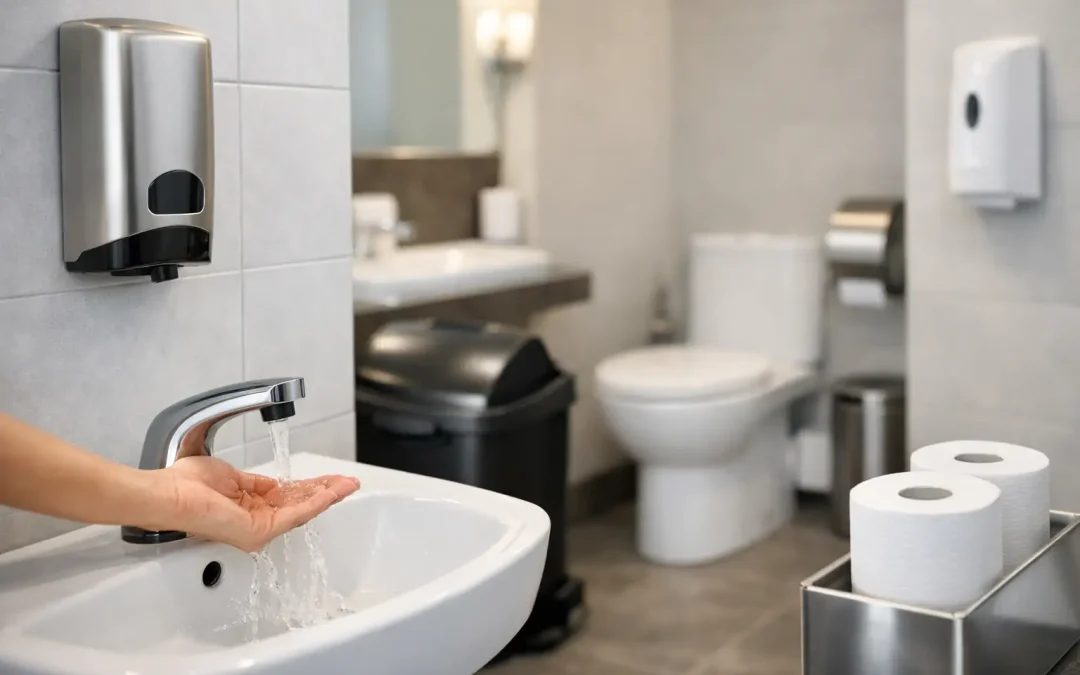
A washroom can tell people more about your standards than your reception desk, signage or marketing ever will. For landlords, employers, care providers and hospitality operators, that matters. This guide to washroom hygiene services explains what these services include, where they add real value, and how to choose a provider that protects hygiene, user confidence and day-to-day compliance.
What washroom hygiene services actually cover
Washroom hygiene services are not limited to emptying bins or changing air fresheners. A proper service is a managed hygiene programme designed to keep washrooms clean, safe, odour-controlled and suitable for the people using them.
In most commercial settings, that means a combination of sanitary disposal units, nappy units where needed, hand hygiene supplies, air scent systems and entrance mat services. In some environments, it also includes more specialised support, such as antiviral sanitisation and disinfection treatments, especially where infection control is under closer scrutiny.
The right package depends on the premises. A small office with a steady staff count will need something different from a care home, a catering site or a high-footfall warehouse facility. That is why a one-size-fits-all contract often creates problems. You either pay for services you do not need, or you end up with gaps that become obvious very quickly.
Why a guide to washroom hygiene services matters for businesses
Poor washroom standards create more than complaints. They can affect staff welfare, customer perception and, in some sectors, regulatory confidence. If washrooms are badly maintained, overflowing or unpleasant to use, the issue is rarely seen as isolated. People tend to assume the same lack of control exists elsewhere in the building.
For compliance-led businesses, the stakes are higher. In healthcare, pharma, food-related environments and care settings, hygiene management is part of a wider operational picture. Washroom servicing supports cleanliness, but it also supports documented standards, routine maintenance and a more defensible position during audits or inspections.
There is also a practical side that is often overlooked. When washroom supplies run out, odours build up or disposal units are not serviced on time, the burden usually falls back on internal staff. That creates inconsistency and pulls people away from their core responsibilities. A managed external service removes that pressure.
The core services most sites need
Sanitary disposal remains one of the most important services. In female washrooms and accessible toilets, correctly installed and regularly serviced units are a basic requirement, not an optional extra. The frequency matters here. A unit that is technically present but not serviced often enough can quickly become a hygiene issue rather than a hygiene solution.
Air scent systems are useful, but they should never be used to disguise poor cleaning or missed servicing. In a well-managed washroom, they help maintain a fresher environment and support user comfort. In customer-facing environments such as clinics, salons, offices and hospitality venues, that can make a noticeable difference to how the space is perceived.
Entrance mats also play a bigger role than many businesses expect. They reduce the amount of dirt and moisture tracked into the building, which helps protect washroom floors and surrounding communal areas. In wet weather, this is not just about appearance. It also supports safety by reducing slip risks.
Hand hygiene support can include soap systems, paper products and other consumables depending on the site. The key point is consistency. If washroom users regularly find empty dispensers, standards slip very quickly.
What good service looks like in practice
A reliable washroom hygiene service should be structured, discreet and easy to manage. That sounds simple, but in practice it depends on scheduling, communication and site knowledge.
Good providers do not just install units and return at random intervals. They assess usage levels, identify where different products are needed and set service frequencies that match the building. A lightly used office toilet may not need the same attendance pattern as a busy staff facility in a logistics or waste environment.
Discretion also matters. In many workplaces, washroom servicing needs to happen with minimal disruption. That is especially true in care settings, medical premises and high-specification commercial environments where professionalism is judged closely.
Documentation can be another important factor. Some businesses only need a dependable service record and a clear point of contact. Others need formal reporting, site notes and evidence that hygiene services form part of a wider compliance framework. If your sector is governed by strict standards, that should be discussed before the service starts, not after an issue arises.
Choosing the right washroom hygiene package
The best approach starts with the building and the people using it. A domestic landlord managing a shared property will have different priorities from a facilities manager responsible for multiple washrooms across a regulated site.
Ask first how many washrooms are in use, how heavily they are used and whether there are any specific user needs. Accessible facilities, baby changing areas, customer-facing toilets and staff-only washrooms often require different combinations of services.
Then consider risk and reputation. If the washroom is used by visitors, clients, patients or residents, standards need to stay consistently high. If the premises are part of a regulated sector, the service should also stand up operationally. That includes reliable attendance, competent technicians and a provider that understands hygiene beyond the basics.
Cost will always be part of the decision, but the cheapest option can become expensive if missed visits, poor communication or unsuitable products create complaints and corrective work. A better question is whether the service is proportionate to the site and dependable over time.
Washroom hygiene services for regulated sectors
Some sectors need more than routine servicing. Care homes, pharmaceutical environments, catering facilities, logistics operations and waste handling sites all face different hygiene pressures. In these settings, washroom standards form part of a broader duty of care and site control.
For example, a care home may place greater emphasis on infection prevention and user dignity. A pharma or GDP-sensitive site may require more detailed reporting and a provider that understands audited environments. A busy catering operation may need closer attention to traffic levels, cleanliness expectations and cross-area hygiene risks.
This is where specialist support makes a difference. A provider with broader hygiene and pest management knowledge can spot issues that a basic washroom contractor may miss. Entrance contamination, poor waste handling, odour problems or signs of pest activity do not sit in separate boxes in the real world. They often overlap.
Homes, rentals and smaller premises
Although washroom hygiene services are often associated with commercial sites, there are domestic and small-property situations where they make good sense. Landlords managing shared accommodation, holiday lets or higher-turnover rental properties may benefit from scheduled hygiene support, particularly where occupancy changes frequently or standards need to be maintained without relying on tenants.
Smaller premises such as salons, cafés, studios and independent clinics also sit in an awkward middle ground. They may not have a full facilities team, but customer expectations are just as high. In these cases, a tailored service contract is often more practical than trying to manage everything internally.
Common mistakes to avoid
The most common mistake is under-servicing. Businesses install the right units, then choose service intervals based on budget rather than usage. That usually works for a short period, then standards fall away.
Another issue is treating washroom hygiene as separate from the rest of site hygiene. If bins are managed well but entrances are dirty, soap dispensers are empty or odours are left unresolved, users will still see the washroom as poorly maintained.
It is also a mistake to focus only on visible appearance. A washroom can look tidy at a glance and still be poorly managed in terms of disposal, replenishment or hygiene scheduling. Good service is about routine control, not occasional improvement before a complaint.
A practical guide to washroom hygiene services when choosing a provider
When comparing providers, look for competence before convenience. Ask what is included, how service frequencies are set, how missed visits are handled and whether the provider can adapt if your site needs change.
It also helps to choose a company that understands hygiene as part of a wider operational responsibility. For many clients, especially in Dublin, Kildare, Meath and Wicklow, that means working with a provider that can support not only washroom services but also sanitation, site hygiene and related risks in a joined-up way. Pest Pure Solutions is one example of that broader service model.
The strongest service relationships are usually the least dramatic. Visits happen when they should, products are appropriate for the site, records are clear and the washroom remains one less thing for your team to worry about.
A well-run washroom does not call attention to itself, and that is exactly the point. When hygiene services are chosen properly, they support comfort, compliance and confidence in a way that quietly protects the whole premises.
Recent Comments