
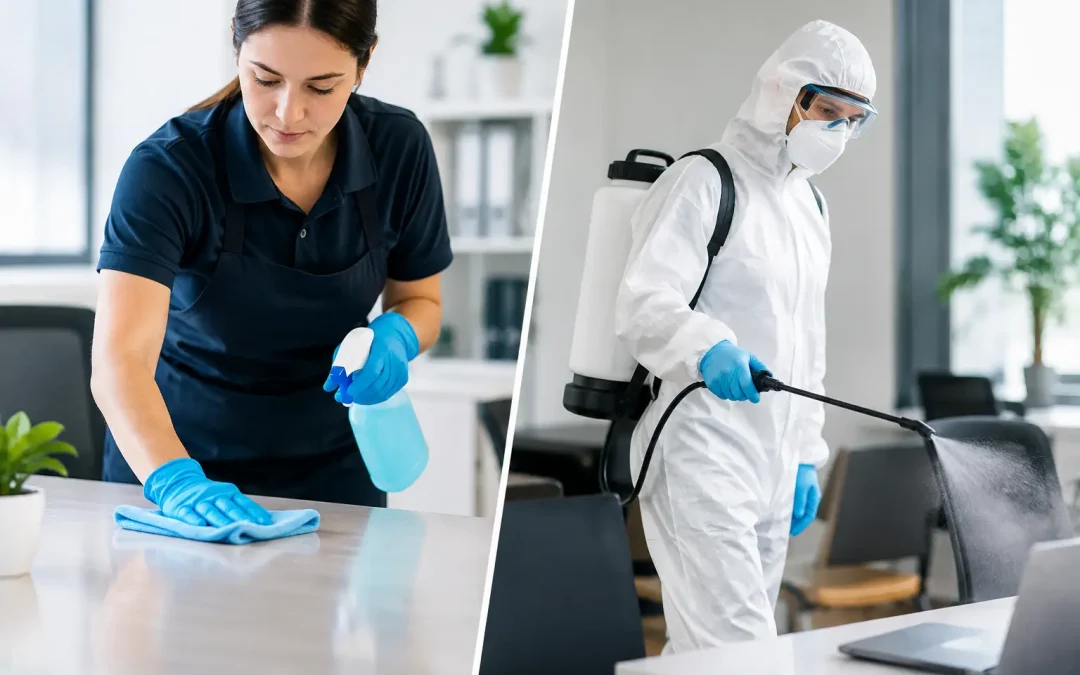
A washroom that looks clean can still have high-touch surfaces carrying microorganisms. Equally, a disinfectant applied to a visibly dirty floor may not work as intended. For facilities managers, caterers and compliance teams, sanitisation vs disinfection for businesses is not a matter of choosing the strongest product. It is about using the right process, at the right frequency, on the right surface.
The distinction affects hygiene standards, staff confidence and business continuity. In regulated settings such as care homes, pharmaceutical facilities, logistics operations and food preparation areas, it can also affect audit readiness. A clear hygiene programme should set out when cleaning, sanitising and disinfection are each required, rather than treating the terms as interchangeable.
Sanitisation vs disinfection for businesses: the difference
Sanitisation reduces the number of microorganisms on a surface to a level considered acceptable for its intended use. It is commonly used where routine hygiene is required, including washrooms, staff kitchens, dining areas and general workplace touchpoints. The objective is to lower contamination and support a clean working environment.
Disinfection is a more targeted process. It uses a product designed to kill or inactivate specified microorganisms on hard, non-porous surfaces. It may be appropriate after illness within the workplace, a hygiene incident, contamination in a food-handling environment, or where a risk assessment identifies a higher level of control.
Neither should be confused with cleaning. Cleaning physically removes dirt, grease, food residues and organic matter. It is usually the first step because soil can prevent a sanitiser or disinfectant from making effective contact with the surface. A chemical product cannot compensate for poor preparation, incorrect dilution or insufficient contact time.
The wording on a product label matters. Some products are formulated for sanitising, some for disinfection, and some can perform both functions when used at the correct concentration and dwell time. Businesses should follow the manufacturer’s instructions and ensure staff understand the difference between spraying a surface and completing an effective treatment.
Why the correct choice matters
Over-disinfecting every area, every day can create unnecessary cost, chemical exposure and disruption. It may also damage sensitive finishes over time. Under-treating higher-risk areas, however, can leave a business exposed when hygiene standards need to be demonstrable.
The right approach depends on the activity in the building, the people using it and the consequences of contamination. A reception desk in an office and a preparation table in a catering kitchen do not carry the same risk. Nor does a washroom in a small workplace require the same programme as a washroom in a busy care setting.
A proportionate plan normally considers footfall, surface type, food contact, vulnerable occupants, recent illness, known contamination and the ability of the site to clean between uses. This helps teams direct effort where it delivers the greatest hygiene benefit.
Routine sanitisation
Routine sanitisation is suitable for areas that need regular microbial control but have no known contamination event. Typical examples include washroom fixtures, shared desks, door handles, lift buttons, canteen tables and staff-room surfaces.
Frequency should reflect use. A lightly occupied office may need daily attention to shared facilities, while a public-facing premises or busy logistics site may require checks and servicing throughout the day. High-touch points are easy to overlook during general cleaning, so they should be specifically included in task schedules.
Targeted disinfection
Disinfection becomes more appropriate when the risk has increased. This could follow a sickness incident, a spill involving bodily fluids, a confirmed contamination concern, or a failure in cleaning controls. It may also form part of documented hygiene procedures in sectors with strict governance requirements.
The key is controlled application. Staff need suitable personal protective equipment where required, clear product instructions and sufficient time for the disinfectant to remain wet on the surface. Wiping a product away immediately can reduce its effectiveness. Mixing chemicals, meanwhile, is unsafe and should never be used as a shortcut.
Do not overlook cleaning before treatment
One of the most common hygiene failures is treating chemical application as a substitute for cleaning. Grease in a kitchen, limescale around washroom fittings, dust in a stockroom and residue on a worktop can all interfere with the process.
A practical sequence is simple: remove loose debris, clean the surface with an appropriate detergent, rinse if the product instructions require it, then sanitise or disinfect using the correct dilution and contact time. For food-contact surfaces, any final rinse requirements must also be followed precisely.
Cloths, mop heads and buckets require control too. Reusing a contaminated cloth across several areas can spread microorganisms rather than remove them. Colour-coded equipment, clear laundering arrangements and replacement schedules make a measurable difference, especially in larger premises.
Hygiene and pest control are connected
Sanitisation and disinfection do not replace pest control, but they are closely linked to effective prevention. Food debris, overflowing bins, standing water and poorly maintained washrooms can attract pests and create conditions in which they thrive. Hygiene is therefore a core part of reducing pest pressure.
This is particularly relevant during winter, when rats and mice seek warmth, shelter and reliable food sources inside commercial buildings. Rodents can contaminate stored goods, food preparation areas and staff facilities through droppings, urine and contact with surfaces. Cleaning alone will not resolve an active infestation. The source of entry, harbourage and food availability must be addressed through a professional inspection and treatment plan.
Silverfish are another year-round concern in damp, undisturbed areas such as washrooms, plant rooms, storage spaces and buildings with moisture issues. Their presence does not automatically mean a site is unclean, but it can indicate conditions that warrant investigation. Reducing humidity, repairing leaks, improving cleaning access and arranging appropriate treatment are often all part of the solution.
For commercial sites, a joined-up programme is more effective than separate, reactive tasks. Good housekeeping makes pest activity easier to identify. Proper proofing reduces access. Regular in-person inspections and documented service records provide the evidence needed to show that hygiene and pest risks are being managed responsibly.
Building a practical hygiene programme
A workable programme should be specific enough for staff to follow and flexible enough to respond to changing risk. Start by separating areas into routine, high-touch and high-risk zones. Then define what must be cleaned, which areas require sanitisation, and what events trigger disinfection.
For example, an entrance and office area may require daily cleaning and sanitisation of shared touchpoints. A staff kitchen may need cleaning and sanitisation after use, with closer attention to food-contact surfaces. A care environment, catering operation or site dealing with a contamination incident may require additional disinfection procedures under its own risk controls.
Records are valuable, particularly for businesses subject to customer audits, internal governance or regulatory expectations. A simple log should show when tasks were completed, which products were used, any issues found and the corrective action taken. The aim is not paperwork for its own sake. It is to show that hygiene controls are consistent and that problems are acted on quickly.
Training should be equally practical. Staff need to know why a product is being used, not merely where the bottle is stored. They should understand dilution, contact time, safe storage, surface compatibility and when to escalate an issue rather than attempting to manage it alone.
When professional support is needed
A professional hygiene or pest management provider can help where recurring issues, contamination concerns or compliance pressures make internal controls difficult to manage. This is especially useful for multi-site operations, care settings, food businesses and premises with rodent activity or persistent silverfish concerns.
Pest Pure Solutions supports businesses with tailored pest prevention, treatment and hygiene-led services, backed by detailed reporting where it is needed. For sites across Dublin and the surrounding counties, a site-specific assessment can identify practical improvements before a minor hygiene weakness becomes an operational problem.
The most effective hygiene standard is one that staff can carry out consistently, managers can verify, and customers never need to question. Start with the actual risk in each area, use products according to their approved purpose, and act promptly when signs of contamination or pest activity appear.
Recent Comments