
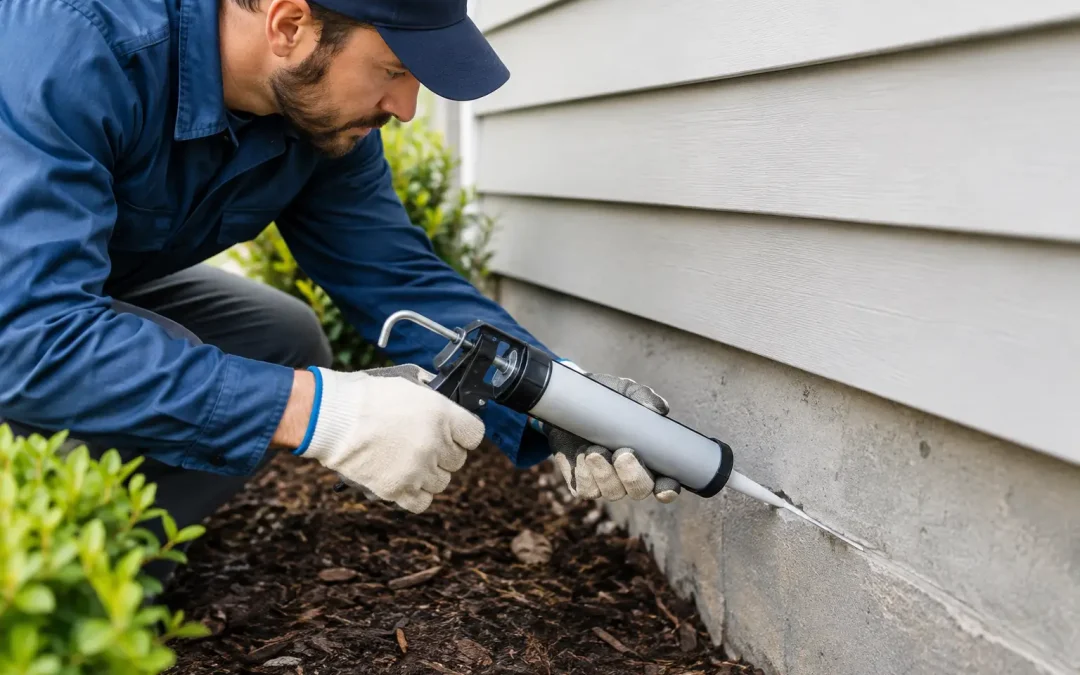
A mouse can enter through a gap of around 6mm – roughly the width of a pencil. Rats need more room, but can still exploit damaged air bricks, loose pipework surrounds and gaps beneath doors. Knowing how to seal pest entry points is one of the most effective ways to reduce rodent pressure during winter, when rats and mice look for warm, sheltered spaces with reliable food and water.
Proofing is not a replacement for treatment where an infestation is already established. If rodents are active inside a property, sealing their usual routes too early can leave them trapped in wall voids, ceilings or storage areas. The right approach is to identify activity, control the infestation safely, then close access points as part of a planned prevention programme.
Start with an exterior inspection
Most rodent problems begin outside the building. A thorough inspection should follow the full perimeter, including rear yards, bin areas, service alleys, rooflines and points where extensions meet the original structure. Do not focus only on obvious holes. Mice often gain access through narrow, concealed gaps behind cables, kitchen pipework or cladding.
Look for fresh droppings, rub marks, gnawing, disturbed insulation and greasy smears along walls. Rats tend to use established runs close to cover, while mice can travel along pipes, cables, shelving and structural edges. An entry point near a food store, boiler cupboard or suspended ceiling may be far more significant than a larger gap in an exposed location.
For homeowners, pay particular attention to the kitchen, utility room, attic, garage and under-stairs cupboard. In commercial premises, inspections should also include delivery doors, loading bays, plant rooms, waste compounds, false ceilings and service penetrations. In catering, care, logistics and pharmaceutical settings, these areas can create a direct hygiene and compliance risk.
How to seal pest entry points properly
The material matters as much as the repair itself. Expanding foam may make a gap look closed, but rodents can readily chew through foam used on its own. It can be useful as a backing material or for small finishing gaps when paired with a rodent-resistant barrier, but it should not be relied on as the main defence.
Small holes around pipework and cables are best closed with a suitable combination of metal mesh, wire wool designed for pest proofing, and a durable mortar, sealant or cement-based finish. The aim is to create a solid repair that cannot be pulled out or gnawed through. For larger defects in brickwork, render or foundations, use a permanent building repair rather than a temporary patch.
Damaged air bricks require more care. They provide necessary ventilation, so they should not simply be blocked. Fit a purpose-made, rodent-resistant mesh cover that maintains airflow while preventing access. The same principle applies to vents, weep holes and other parts of the building designed to manage moisture and air movement. Blocking ventilation can lead to damp, mould and more costly property issues.
Gaps beneath external doors are another common route, especially at garage doors, side entrances and poorly fitted fire exits. Fit durable bristle strips or metal door sweeps where appropriate, and repair warped frames or damaged thresholds. Any door used frequently should still close and operate safely after proofing.
Roof-level proofing is often overlooked. Loose soffits, broken eaves, gaps around fascia boards and uncapped openings can allow mice to enter lofts and ceiling voids. Tree branches, climbing plants and stored materials stacked against walls can make that route easier. Trim vegetation back from the building where practical and keep stored items clear of external walls.
Do not seal every opening without checking its purpose
Some openings are required for drainage, combustion appliances, electrical installations or ventilation. Sealing them incorrectly may create a safety issue or breach building requirements. If you are unsure whether an opening is functional, have it assessed before carrying out work.
This is particularly relevant in commercial properties with complex services. Plant rooms, risers, cable trays and multiple contractor penetrations can create hidden access routes. A professional pest proofing survey can identify which gaps need repair, which require mesh protection and which must remain open for building performance.
Prioritise the gaps that pose the highest risk
Not every defect needs the same response. Start with openings that connect directly to occupied areas, food storage, waste areas or internal voids. Then work outwards to reduce the conditions that encourage rodent activity around the site.
A practical priority order is:
- gaps around utility pipes, drains, cables and boiler pipework
- doors that do not close flush with the threshold or frame
- damaged air bricks, vents and low-level grilles
- defects around rooflines, soffits, cladding and eaves
- broken drain covers, unused openings and damaged brickwork near ground level
Check drains and inspection chambers too. Rats can use defective drains to move beneath or into buildings. Cracked covers, uncapped redundant pipes and poor seals around drainage runs all deserve attention. Drain-related activity should be investigated properly rather than covered over, as the visible hole may not be the true source of the problem.
Remove the reasons rodents stay nearby
Proofing works best when it is combined with good housekeeping. A perfectly sealed building can still face repeated pressure if food, water and shelter are available directly outside.
Keep refuse in sound containers with lids that close properly, and make sure waste collection areas are cleaned regularly. Do not allow bags to accumulate beside bins. Store animal feed, bird seed and dry goods in sealed containers, and clear fallen fruit or food debris from gardens and yards. Leaking outdoor taps, dripping condensate pipes and standing water can also support rodent activity.
Inside, clean behind appliances and avoid leaving pet food out overnight. In workplaces, food preparation, staff canteens and vending areas require consistent cleaning, while stock should be stored off the floor and away from walls where possible. These measures make inspections easier and reduce the chance that a single mouse becomes an established problem.
Seal entry points as part of treatment, not before it
If you have heard scratching in walls, found fresh droppings or seen a rat or mouse indoors, assume there may be more than one access route. Closing one visible gap can push activity elsewhere. It may also cause rodents to gnaw new openings through vulnerable materials.
A professional inspection identifies signs of current activity, likely travel routes and the repairs most likely to prevent recurrence. Treatment can then be coordinated with proofing, so that access is restricted at the right stage. For commercial sites, documented inspections and corrective actions also provide useful evidence that pest risks are being actively managed.
Pest Pure Solutions provides rodent control and pest proofing for homes and businesses across Dublin, Kildare, Wicklow and Meath, with practical recommendations suited to the property and its operational risks. This is especially valuable where hygiene, vulnerable residents, food handling or regulatory standards are involved.
Remember year-round moisture pests
Sealing gaps also helps with pests beyond rats and mice, but it is not a complete answer for silverfish. Silverfish often thrive where moisture, harbourage and paper-based materials are present, such as bathrooms, utility areas, airing cupboards and poorly ventilated storage spaces. Repairing leaks, managing humidity and reducing clutter are usually as important as closing cracks around skirting boards and pipework.
A well-proofed property is not one with every opening filled. It is a building where access routes are controlled, necessary ventilation remains safe, and the conditions that attract pests are dealt with before they become a larger problem.
Recent Comments